Is Barbaresco Better Than Barolo?
The honest answer refuses the premise: neither Barbaresco nor Barolo is better, they are the same grape under different cellar rules and different hills. Here is how the two zones actually differ, on the palate and on a bike.
 By Chiara Barbero, Piedmont Bike Tour Guide and Langhe Cycling Specialist
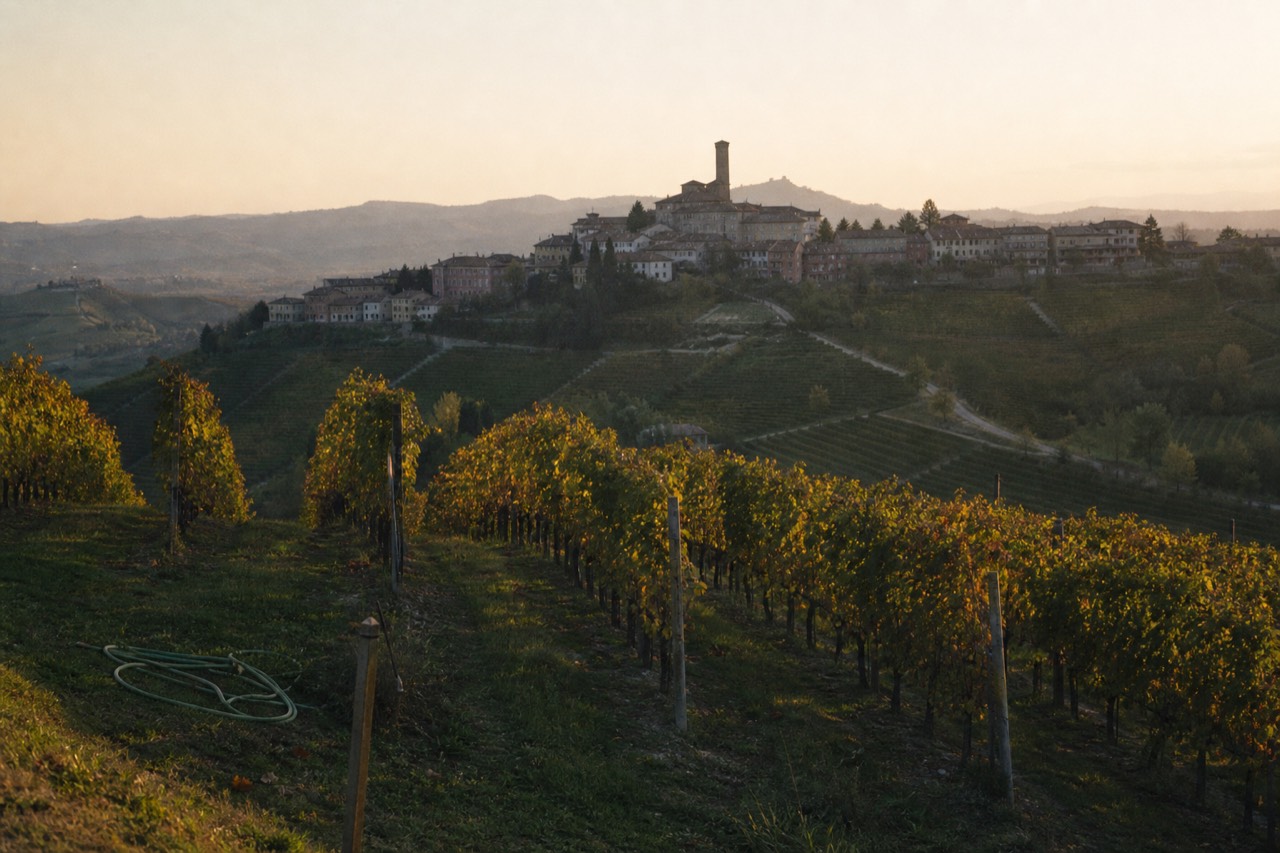
Is Barbaresco Better Than Barolo?
No, and the question is built on a false either/or. Barbaresco and Barolo are both 100% Nebbiolo, grown on neighbouring hills about 6 km apart, and neither is objectively superior. Barolo spends longer in the cellar, 38 months minimum against Barbaresco's 24, which builds different textures rather than different quality tiers. Which one suits you depends on your palate, your budget and which villages you want to ride through.
That is the honest verdict, and it is worth unpacking because the "which is better" framing appears constantly in search results. It usually comes from a single comparison: Barolo is more famous, more expensive and more powerful, so is Barbaresco the smarter buy? Sometimes, yes. Sometimes the reverse. A wine's price reflects scarcity and demand as much as quality, and Barolo's greater fame does a lot of work in its price tag.
The two wines are genuinely siblings. Barolo comes from 11 comuni in the province of Cuneo, only three of them wholly inside the zone, under rules set by the Consorzio di Tutela Barolo Barbaresco Alba Langhe e Dogliani. Barbaresco comes from the entire territory of Barbaresco, Treiso and Neive, plus part of the comune of Alba. The villages of one zone are visible from the other on a clear day. Barbaresco village itself sits about 13.5 km from Alba by road, Barolo about 14, and the two wine capitals are linked by roughly 6 km of hill road.
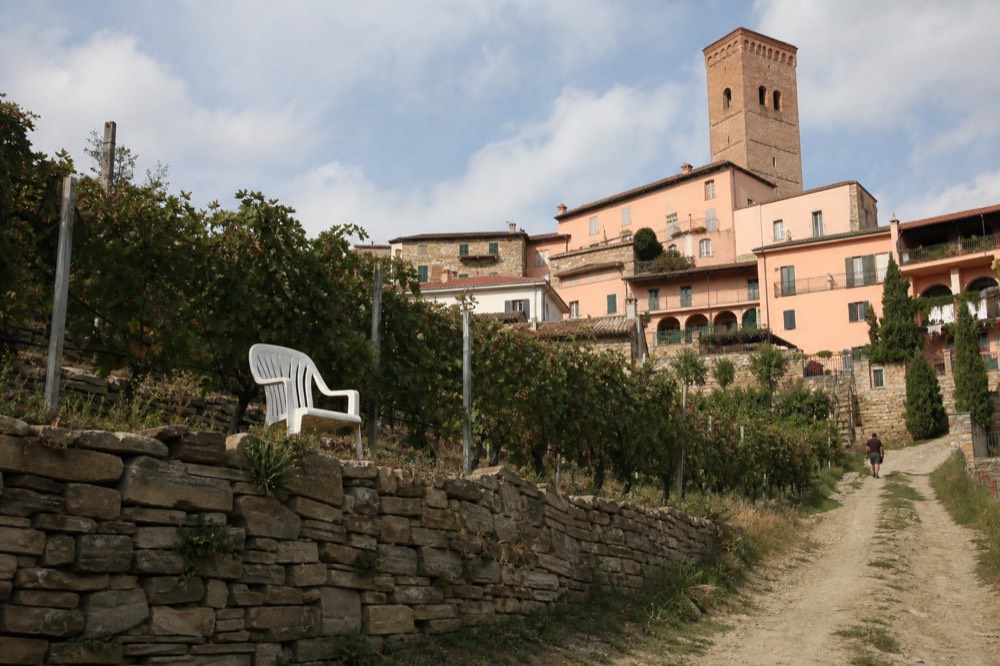
What separates them in practice is scale and time. The zone is the first difference: Barolo spreads across eleven communes, Barbaresco across three and a slice of Alba, so there is simply less Barbaresco made. The cellar is the second: Barbaresco ages for two years minimum, nine of them in oak, and can call itself Riserva after four years, while Barolo holds for 38 months, 18 in wood, with the clock starting on 1 November of the harvest year, and Riserva status at 62 months. Same grape, roughly a year and a half apart in the cellar, and the resulting wines show it.
If you are planning to see both zones by bike, these three rides are the natural starting points:
A site like Piedmont Bike Tours exists partly because this comparison is best settled in person, riding from one zone into the other inside a single afternoon.
How Do The Cellar Rules Actually Differ?
The ageing rules are the cleanest, most verifiable difference between the two wines. Barolo must age a minimum of 38 months, of which 18 in wood, counted from 1 November of the harvest year; Riserva needs 62 months. Barbaresco needs 24 months with 9 in oak, and Riserva after 4 years. Barbaresco also reached DOC status in 1966 and DOCG in 1980, among the first DOCGs.
Those numbers come straight from the production disciplinari, not from tasting-room folklore, and they explain most of what people perceive as a style difference. Longer wood and bottle ageing generally means Barolo lands in the glass with firmer structure and slower-opening aromas when young, while Barbaresco, with nine months in oak and a year less total ageing, is often described as more approachable earlier. Described, deliberately, because no vintage-by-vintage quality ranking between the two is verifiable, and anyone who tells you one is flatly better is selling something.
The full rule set, side by side:
| Rule | Barolo DOCG | Barbaresco DOCG |
|---|---|---|
| Grape | 100% Nebbiolo, no blending permitted | Nebbiolo in purezza |
| Production zone | 11 comuni in the province of Cuneo, only 3 entirely inside the zone | The entire territory of Barbaresco, Treiso and Neive, plus part of Alba |
| Minimum ageing | 38 months | 24 months |
| Minimum in wood | 18 months | 9 months in oak |
| Riserva | 62 months | After 4 years |
| Recognition trail | Zone first defined by the ministerial decree of 31 August 1933 | DOC in 1966, DOCG in 1980, among the first DOCGs |
The reputational gap is a marketing history, not a verdict. Barolo acquired the nickname "the king of wines and the wine of kings" in the 19th century and never lost the crown, which is why a top Barolo commands a premium over a comparable Barbaresco almost irrespective of quality in the glass. The premium is real and it shapes a visitor's budget: a tasting flight built around Barolo generally costs more than one built around Barbaresco, though cellar-door prices vary producer by producer, so treat any specific price you see quoted as a listing, not a market average.
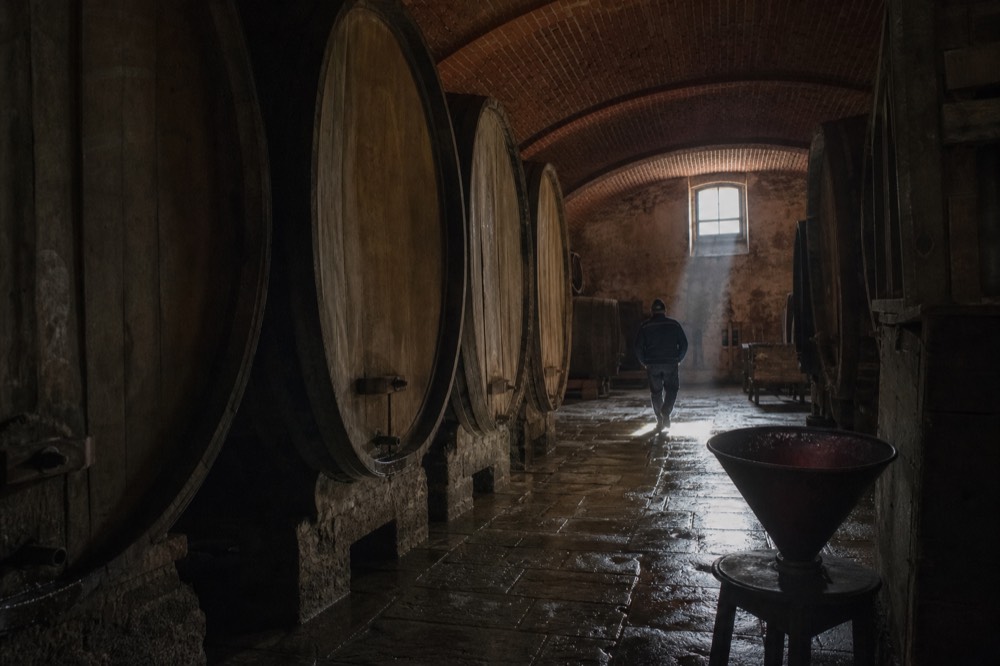
Scale is the quieter difference, and the official numbers make it plain. Barolo's production zone held 2,288 hectares of vineyard in 2025, up 10.6% in a decade, in the IRES Piemonte regional data. For Barbaresco, no verified hectare count appears in that same official material, and the absence is itself a marker of the gap: one zone is measured and quoted constantly, the other is smaller and less documented. Less famous, in short, is not less good; it is mostly less numerous.
Both zones also share a production squeeze right now. The Consorzio's assembly approved a 10% cut in maximum yields for the 2026 harvest, bringing Langhe Nebbiolo and Barbera d'Alba down to 90 quintals per hectare, as Gazzetta d'Alba reported. That is a response to softening prices and rising stocks, not a quality statement, and it affects both zones equally, so it changes nothing in the better-than argument.
There is fresh evidence on quality, if you want it. At the Grandi Langhe 2026 trade tasting in Turin, which previewed the 2022 Barolo and 2023 Barbaresco vintages side by side, roughly a quarter of the 2022 Barolos shown scored 95 points or more, a very strong showing. When the trade's own scorekeepers put both zones on the same stage, they rate them vintage by vintage, not one above the other.
The most recent finished vintage tells the same story. The 2025 Piemonte harvest came in 7-10% below the previous year's volume and was rated eight to nine stars on the Consorzio's own annual scale., and the Deditus association of historic Barolo producers praised the wines' balance and ageing potential. Those judgements cover both zones together, because that is how the region itself assesses them.
For the full rule-by-rule breakdown, including how the two zones divide up the eleven Barolo communes, the site's dedicated comparison guide is the deeper reference: Barolo versus Barbaresco, hill by hill.
How Do The Two Zones Differ When You Ride Them?
On a bike the two zones feel more different than they do in the glass. The Barolo hills spread across eleven villages and offer the longer, bigger loops, with roughly 877 m of climbing on a full villages circuit from Alba. The Barbaresco zone is compact, three villages and part of Alba, reachable on a shorter loop of about 35.6 km with around 457 m of ascent. Barolo is the grand tour; Barbaresco is the concentrated one.
Those loop figures are computed from real road routing and terrain data, so treat them as solid planning shapes rather than an operator's brochure. The distinction matters most for time-boxed visitors. If you have one day and want village after village, Barolo's spread delivers: La Morra at 508 m of elevation, Monforte d'Alba, Serralunga d'Alba with its castle, Castiglione Falletto, Barolo itself with just 613 residents. If you have half a day, the Barbaresco side packs Neive, Treiso and Barbaresco village into a tighter, lusher package, with the Tanaro river plain never far below you.
The two zones, measured from Alba:
| Measure | Barolo zone | Barbaresco zone |
|---|---|---|
| Full loop from Alba | about 67.9 km | about 35.6 km |
| Climbing on that loop | roughly 877 m | roughly 457 m |
| Highest point on the loop | 521 m | 410 m |
| Signature villages | La Morra, Barolo, Serralunga d'Alba, Monforte d'Alba, Castiglione Falletto | Barbaresco, Neive, Treiso |
| Anchor village elevation | La Morra at 508 m | Barbaresco at 262 m, Neive at 294 m |
| Road distance from Alba | Barolo 13.9 km, La Morra 15.8 km | Barbaresco 13.5 km, Neive 13.4 km |
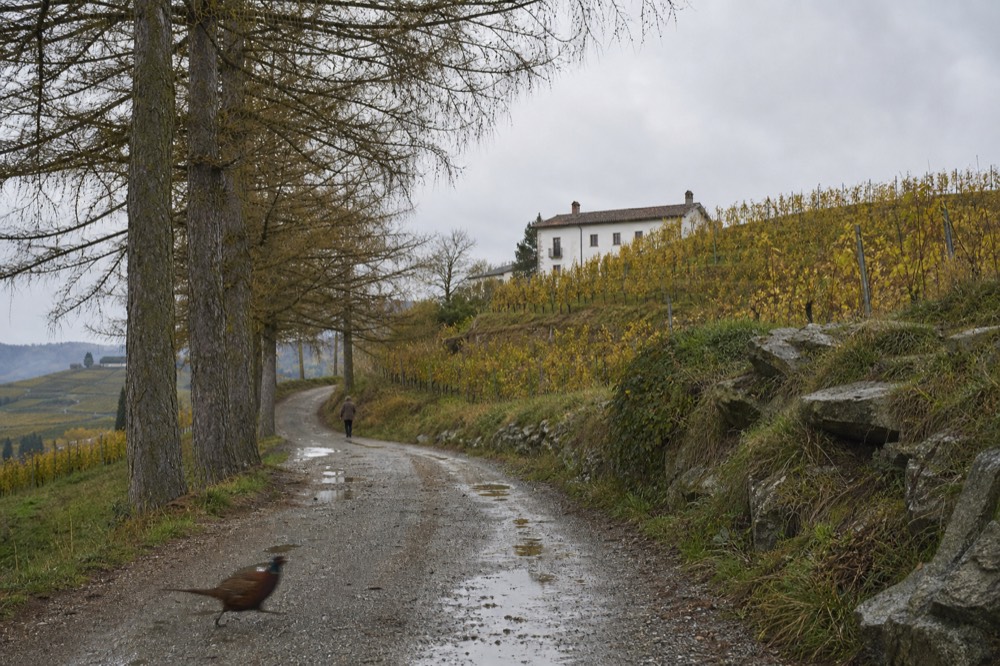
The texture of the two zones differs in a way that maps onto the wine. Barolo country is higher and more rugged at its edges: La Morra stands 508 m above sea level and the riding between the villages rolls relentlessly. Barbaresco country, anchored by villages sitting in the 262-294 m band, is gentler and greener, with more woodland breaking up the vines. Neither is hard on an e-bike, and pedal assist is precisely why these hills suit a wine-focused day, a point covered in detail in why e-bike touring works in the Langhe.
A single tour can straddle the argument nicely. The Langhe Slow e-bike tour between Serralunga d'Alba and Barolo, both UNESCO-heritage Barolo-zone villages, runs about 5.5 hours from $157 per person. It is a new listing with no review history yet, so there is no rating to weigh; the price and itinerary are what the live listing shows.
On the other side of the argument, the Neive to Barbaresco cycling tour covers the classic Barbaresco-zone link, about 5 hours from $186 per person, also as a new listing with no reviews yet. Riding the two zones back to back is honestly the fastest way to stop asking which is better and start noticing which hills you personally prefer.
Which Zone Should You Visit First, And For How Long?
Visit the Barolo zone first if you want the postcard names, the museum cellars and the longer rides, and Barbaresco first if you prefer quieter villages, shorter loops and a slightly gentler hit on the wallet. Two days covers both zones comfortably from a single base in Alba, which sits about 14 km from Barolo, 13.5 km from Barbaresco and 15.5 km from Serralunga d'Alba.
Alba is the practical answer to the logistics. Every village named in both wine zones sits within roughly 20 km of the town, which is why basing there and riding out each morning is the standard pattern. Alba itself recorded nearly 281,500 overnight stays in 2025 as the leading destination in its province, so the tourism infrastructure, including bike rental in the Alba and Barolo area, is genuinely there. The trade-off is October: occupancy in the Alba short-let market peaks in autumn around the truffle fair, so book earlier for that window.
A two-day split works like this. Day one, the Barolo villages loop: Grinzane Cavour, La Morra, Barolo, Novello, Monforte d'Alba, Serralunga d'Alba and Castiglione Falletto, roughly 68 km and about 877 m of climbing, best done with pedal assist and a cellar stop in Barolo village itself. Day two, the Barbaresco loop: Barbaresco, Neive and Treiso, about 36 km and 457 m of climbing, leaving time for a long lunch, which in this zone is not an optional extra.
Autumn is the one season where both zones feel equally busy, and the reason has a date. The 96th Alba white truffle fair runs 10 October to 6 December 2026, with the world truffle market open on Saturdays and Sundays only, and its pull is what stands behind that October occupancy peak. The riding is at its best in the same weeks: typical September highs around 23.6 °C ease toward October's 17.6 °C, warm enough for long lunches with the vines turning colour after the harvest.
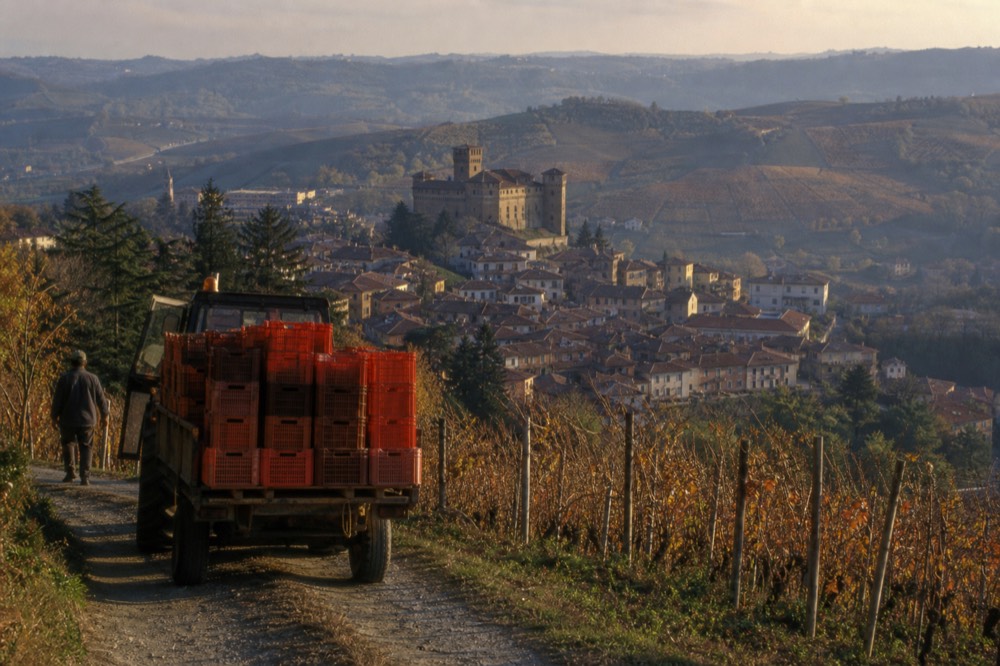
Cost behaves differently in the two zones, though not as differently as the shelf prices imply. Tastings with a cellar visit in the Alba area are listed from around €25 to €50 per person, and the Barolo side of that range tends to sit at the top because the wines poured cost more to buy back. Flights built on Barbaresco generally start lower. Neither zone is cheap and neither is a rip-off; you are paying for Nebbiolo off world-famous hills either way. The budget side of a Langhe trip, including which free and low-cost options exist, is laid out in cycling Piedmont on a budget.
There is a third option worth naming, because it dissolves the question entirely. The two zones share a border and the riding links them, so a tour that crosses from one into the other answers the comparison better than any tasting table. The selection below covers both zones plus a picnic format, which is the relaxed middle path:
The picnic-format Barolo e-bike tour, about 6 hours from $93 per person, is the value pick of that trio, while the Serralunga-Barolo and Neive-Barbaresco rides each plant a flag in one zone. Whichever you choose, the honest conclusion stands: the better wine is the one in front of you, in the village you just climbed out of. If you want to go deeper on why the famous name costs what it does, the site's price explainer is why Barolo is so expensive.
Neither wine wins outright: Barbaresco and Barolo are 100% Nebbiolo from adjacent Langhe hills, divided by cellar time, zone size and price rather than by quality rank. Barolo ages 38 months and costs more; Barbaresco ages 24 months and drinks earlier. The questions below cover the rules, the prices, the riding and how to split a visit between the two zones.
Common Questions About Barbaresco Versus Barolo
Is Barbaresco better than Barolo?
No. Both are 100% Nebbiolo from neighbouring hills in the Langhe. Barolo ages longer, 38 months minimum against Barbaresco's 24, and carries a bigger price and reputation. Barbaresco is often more approachable younger and kinder to a budget. Which is "better" depends on the bottle, the vintage and your taste, not on a permanent hierarchy between the zones.
What is the main difference between Barolo and Barbaresco?
Cellar time and zone size. Barolo must age 38 months, 18 of them in wood, counted from 1 November of the harvest year, across a production zone of 11 comuni. Barbaresco ages 24 months with 9 in oak, from just three comuni plus part of Alba. The result is typically a firmer, slower Barolo against a softer, earlier-drinking Barbaresco.
Why is Barolo more expensive than Barbaresco?
Mainly fame and scale. Barolo's zone is larger but its reputation as "the wine of kings" drives demand that consistently outpaces supply for the most sought-after producers. Smaller production and earlier drinkability keep Barbaresco's prices lower at comparable quality. Production costs in the two zones are broadly similar.
Can you visit both Barolo and Barbaresco in one day?
Yes, by bike it is realistic. Barolo and Barbaresco villages are roughly 6 km apart by hill road, and both sit within about 14 km of Alba. A full loop of the Barolo villages from Alba is around 68 km with about 877 m of climbing, so an e-bike or a full day is the comfortable way to do it with a tasting stop or two.
Is Barbaresco a good wine for the money?
Frequently, yes. Because it shares the Nebbiolo grape, the same hills and the same producer expertise as Barolo while carrying a smaller reputation premium, Barbaresco is widely regarded as one of the better value routes into top Langhe Nebbiolo. Vintage-by-vintage quality still varies, as it does everywhere, so producer choice matters more than the zone name on the label.