Is Turin Italy Worth Visiting
An honest verdict on Turin for a visitor whose main reason for coming to Piedmont is the wine hills, and what a day on the bike in the city actually gets you.
 By Chiara Barbero, Piedmont Bike Tour Guide and Langhe Cycling Specialist
Is Turin Italy Worth Visiting
Yes, Turin is worth visiting, with one qualification: it earns a day or two of a Piedmont wine-hills trip, not a whole week. The average tourist stay in Turin runs 2.5 nights, and for most riders passing through toward Alba that is about right. The city has Italy's best Egyptian museum, a UNESCO-listed Savoy court, and a food culture that explains everything you will eat in the Langhe afterward, all at prices well below Milan or Rome.
The case against Turin is the case against any industrial capital: it is a working city, gray in winter, hot in summer, and its pleasures are architectural and culinary rather than scenic. If your mental image of Piedmont is vineyard rows, Turin will not give you that.
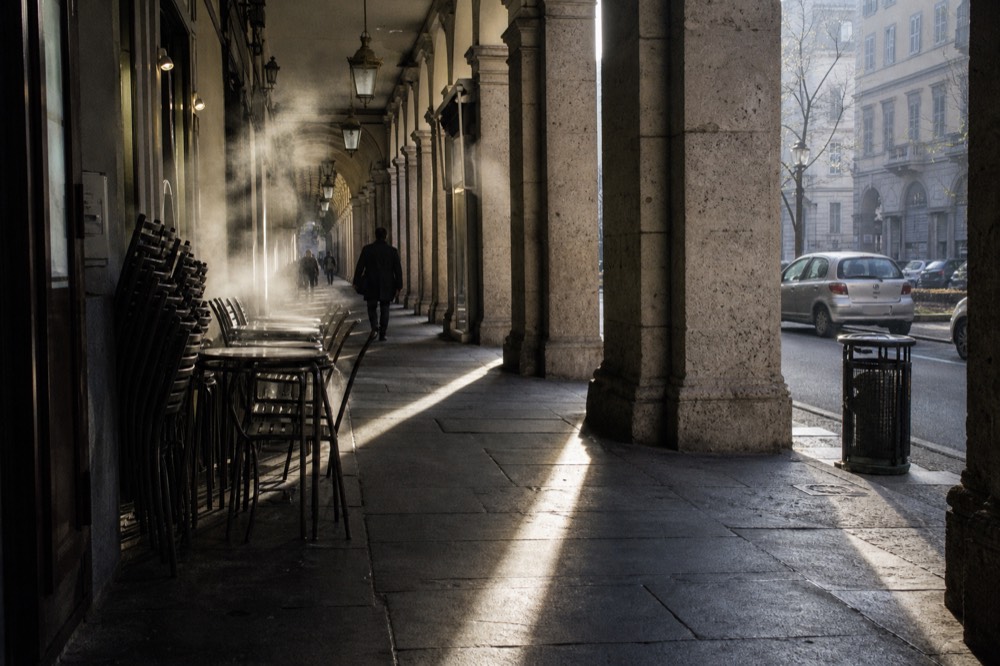
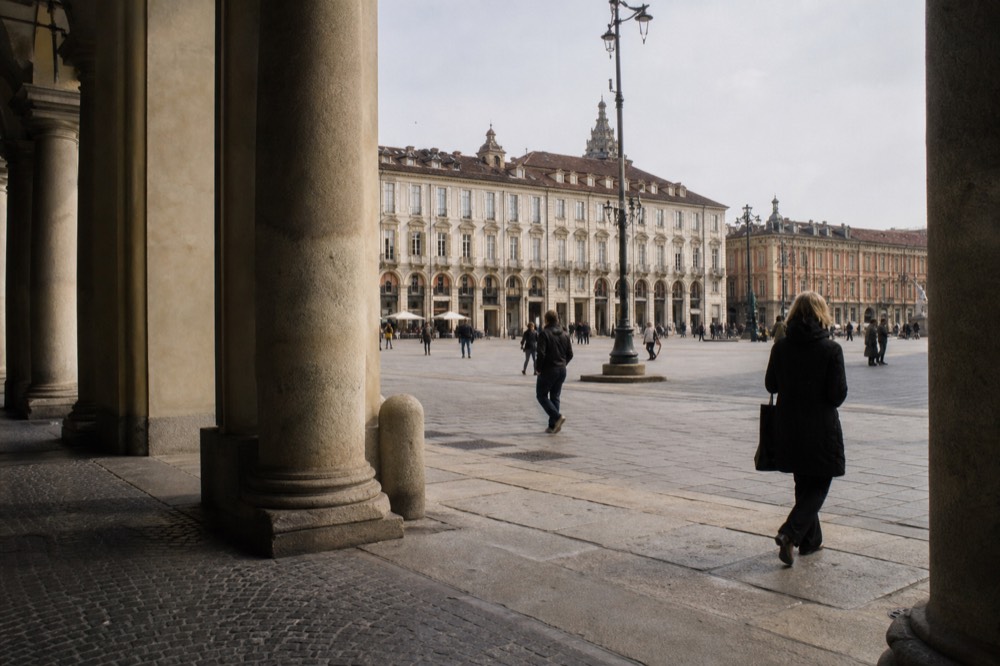
The case for it is stronger than most first-time visitors expect. This was the capital of a kingdom, the House of Savoy, and it still carries itself like one: arcaded streets, grand squares, a chocolate and coffee culture that predates Italian unification, and a museum density that punches far above the city's tourist profile. Museo Egizio, the Egyptian Museum, holds one of the world's great Egyptian collections, and its full-price ticket is €18 in 2026 with mandatory online purchase for timed entry.
For a cyclist it has one more practical virtue: it is the place you almost certainly fly or train into. Turin Caselle handled 2,888,628 passengers in the first half of 2026, up 17.3% year-on-year, and Wizz Air opened a base at the airport in September 2026 adding routes to Barcelona, Bilbao and Valencia. The city is your gateway whether you plan on it or not. The question is whether you use it.
If you are weighing where your days go, the honest split is this: two nights in Turin at the start, then the Langhe. The city rewards exactly that dose, and the wine hills reward everything after it. We lay out the day-by-day logic in how many days in Turin is enough.
What Does Turin Offer That The Wine Hills Don't?
Turin gives you museums, royal architecture and a café-and-chocolate tradition that the Langhe villages simply cannot match, while the wine hills give you landscape and cellars the city cannot. Barolo village has 613 residents and no Egyptian collection. Turin has the Museo Egizio, the Mole Antonelliana, the Palazzo Reale, and roughly 40 museums in a walkable grid. A visitor who skips the city misses an entire layer of what Piedmont is.
The two experiences are not competing, they are sequential. Turin was the political engine of the region: the Savoy court that made these hills a wine economy sat here, and the shopping arcades, apertivo bars and gianduja chocolate shops of the centro storico are the urban expression of the same wealth the vineyards produced. Spend a day in the city first and the Langhe reads differently afterward, as the countryside retreat of the same dynasty.
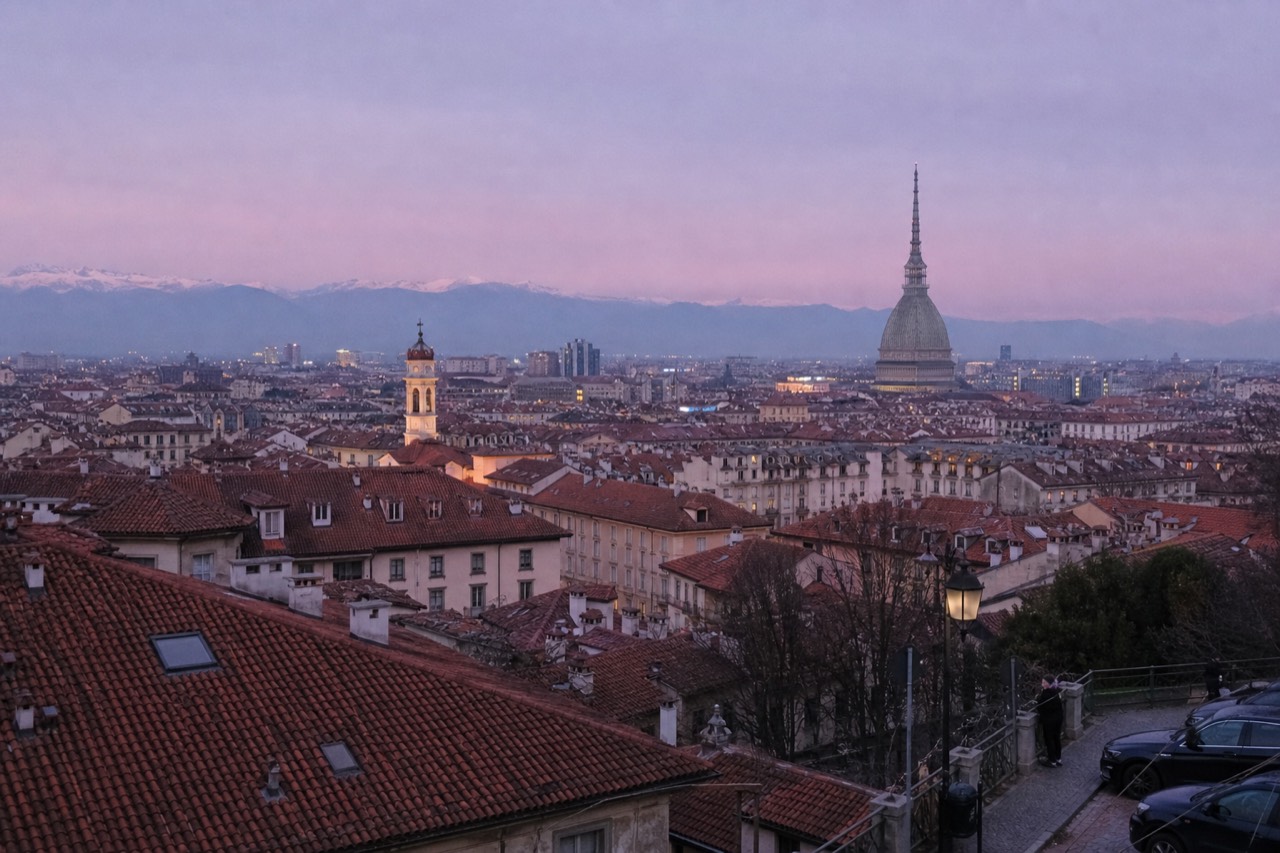
Concretely, a Turin day looks like this: the Museo Egizio in the morning (buy the timed ticket online, it is mandatory), Piazza Castello and the Palazzo Reale at midday, a bicerin or an espresso under the arcades, and the Mole Antonelliana, the tower that appears on the Italian two-cent coin, in the afternoon. The National Cinema Museum inside it is running a Gillo Pontecorvo exhibition from 16 September 2026 to 5 April 2027, and the Pontecorvo and Orson Welles shows give museum-goers a reason to linger into autumn.
One honest caveat on the Mole: visits to the cupola interior were suspended through summer 2026 due to high temperatures, with the suspension window running to 31 August 2026. The museum below stayed open. Check the current cupola status on the museum's own site before you promise yourself the panorama.
For a cycling visitor the food city is the quiet argument. Turin is the home of the aperitivo, of gianduja, of agnolotti served in dining rooms that predate the trattorias of Alba. If you want the deep end of Piemontese eating, the city is where it is easiest to reach without a car.
How Many Days Do You Need In Turin?
Two nights, one full day, is the sweet spot for a wine-hills visitor, and the official numbers back that up: average tourist length of stay in Turin and its first belt was 2.5 nights in 2025. One day covers the Egizio, Piazza Castello and the Mole with time for lunch. A second day buys you the food market or a guided ride, but past three days the city starts competing with the Langhe and losing.
The single-day version works because Turin is compact. The historic centre is a Roman-era grid of roughly 1.5 km per side, flat, arcaded, and walkable end to end in half an hour. The museums cluster around Piazza Castello and Piazza Carignano, so nothing essential requires a tram ride.
The two-day version is what we would actually recommend. Day one for the Egizio and the centro storico. Day two for a bike tour in the morning, which is the fastest way to see the districts a walker skips, and either the Parco del Valentino along the Po or one of the Savoy residences in the afternoon. Salone Internazionale del Libro, the book fair at Lingotto Fiere, drew 254,000 visitors in May 2026, and events of that scale are the reason a third day sometimes earns its keep, but only if your dates coincide.
The wrong answer is treating Turin as a half-day stop between the airport and Alba. You will spend the whole time in transit corridors and see none of the city that makes it worth the stop. Either give it a real day or push straight through to the hills.
Is Turin Expensive To Visit?
Turin is one of the more affordable major Italian cities to visit. A single GTT city transport ticket costs €1.90 in the app or €2.00 on paper, the Museo Egizio full-price ticket is €18, and the tourist tax runs from €3 per night at a 1-2 star hotel up to €5 at a 5-star. Set against the prices a Milan visitor faces, Turin reads as a bargain.
Milan's cost of living is the starkest benchmark: a basket of 20 food items and 13 services in Milan reached 693 euros in 2026, the highest in Italy and nearly double Naples at 402 euros. Turin sits well below that. In the 2025 Il Sole 24 Ore quality-of-life survey of 107 Italian provinces, Milan ranked 8th while Turin ranked 57th, and part of what Turin gives up in economic ranking it hands back to a visitor as prices that have not been bid up by finance and fashion money.
The budget picture for a rider:
| Item | Typical 2026 cost |
|---|---|
| GTT single city ticket | €1.90 digital, €2.00 paper |
| Museo Egizio full ticket | €18, timed entry booked online |
| Turin tourist tax per night | €3 to €5 by hotel category, €3.80 for non-hotel lodging |
| Guided city bike tour | from $35 per person |
| E-bike city and viewpoint tour | from $45 per person |
The tourist tax details: Torino raised its imposta di soggiorno on 1 April 2026 to €3 for 1-2 star hotels, €3.50 for 3-star, €4.50 for 4-star and €5 for 5-star, with non-hotel accommodation at €3.80. Those are Turin figures only; the wine villages set their own rates. The city transport authority's own ticketing page carries the current fares, and the Comune di Torino publishes the tax rates.
Where the money goes matters too. The city's museums are the main spend, and they are priced like national institutions rather than tourist traps. If you plan to museum-hop hard, the Abbonamento Musei Piemonte Valle d'Aosta pass remains €58 full price for adults, covering the major sites, though at two days of museum-going the per-visit maths usually only works if you also use it in the Langhe and Asti.
Money aside, the honest counterweight on Turin is climate. Summer 2026 was the hottest on record in Piemonte, with 18 consecutive tropical nights in Turino in June, and the city recorded 36°C on 5 September 2026, a September record back to 1895. May and September through October are the comfortable windows; mid-July and August are not.
What Is Riding A Bike In Turin Actually Like?
Riding a bike in Turin is genuinely good, better than its gray postcard reputation suggests, with Biciplan sensors counting 8.9 million cyclist passages over 33 sensors in the most recent full year, averaging 24,000 a day. The flat, gridded centre, car-free Po riverside, and a plan for 85 km more protected lanes make it easy, and a guided tour from around $35 covers the whole core in three hours.
Turin's layout is a cyclist's gift. The Roman grid gives you straight, flat streets inside a compact centre, and the Po runs along the eastern edge with Parco del Valentino as a car-free spine. The climb everyone talks about is the one up to the basilica of Superga on the hill above the river, and a city tour does not include it: an e-bike variant that ends at a viewpoint instead is the version built around the panorama.
The city's own commitment is measurable. The metropolitan Biciplan targets an additional 85 km of protected bike lanes and a 15 percent modal share for cycling, and a shared bike, e-bike and scooter service covering Turin and 15 surrounding communes is set to launch with 8,900 vehicles by the end of October 2026. Torino also climbed 23 places to 62nd in the Legambiente Ecosistema Urbano 2025 environmental ranking of Italian capitals, so the trend line is in a rider's favour.
For a visitor the practical question is guided or self-guided. Turin's one-way arcaded streets are navigable but not intuitive on a first visit, and a three-hour guided loop solves that. The Turin City Highlights tour is the volume favourite, rated 4.6 across 497 reviews from $35, while the e-bike viewpoint version rates 4.9 across 371 reviews from $45, and its riders consistently praise the climb-free route to the best panorama of the city.
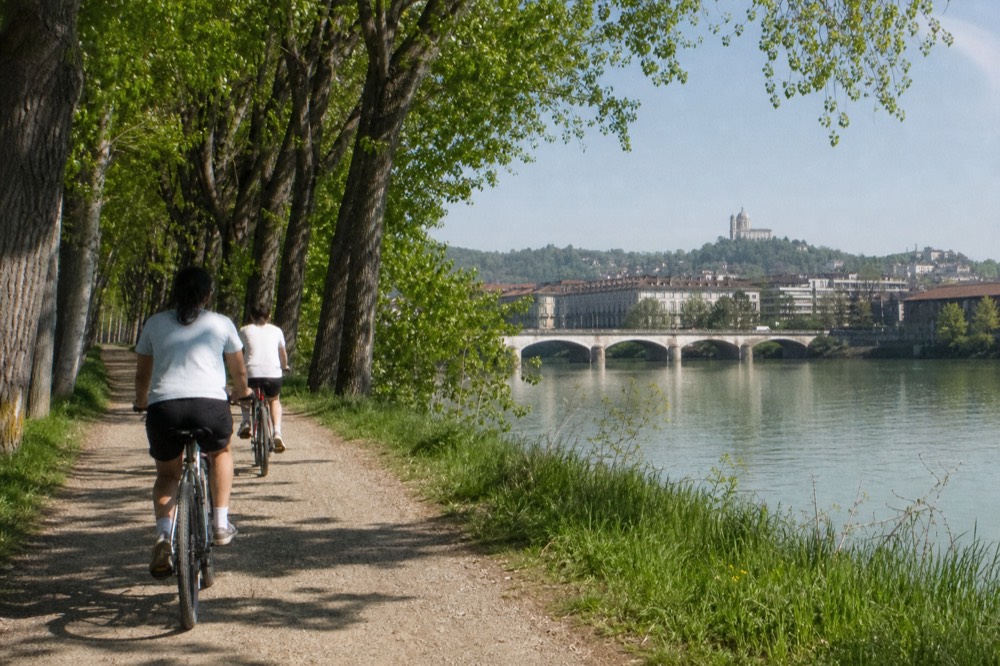
The same rules that apply in the hills apply here, and we cover the detail in are e-bikes allowed in Italy. The short version: no helmet law at any age, but a bell is legally required equipment, and outside built-up areas after dark you need a reflective vest. Inside a city grid that mostly does not bite; on the river path after sunset it can.
When Is The Best Time To Pair Turin With The Wine Hills?
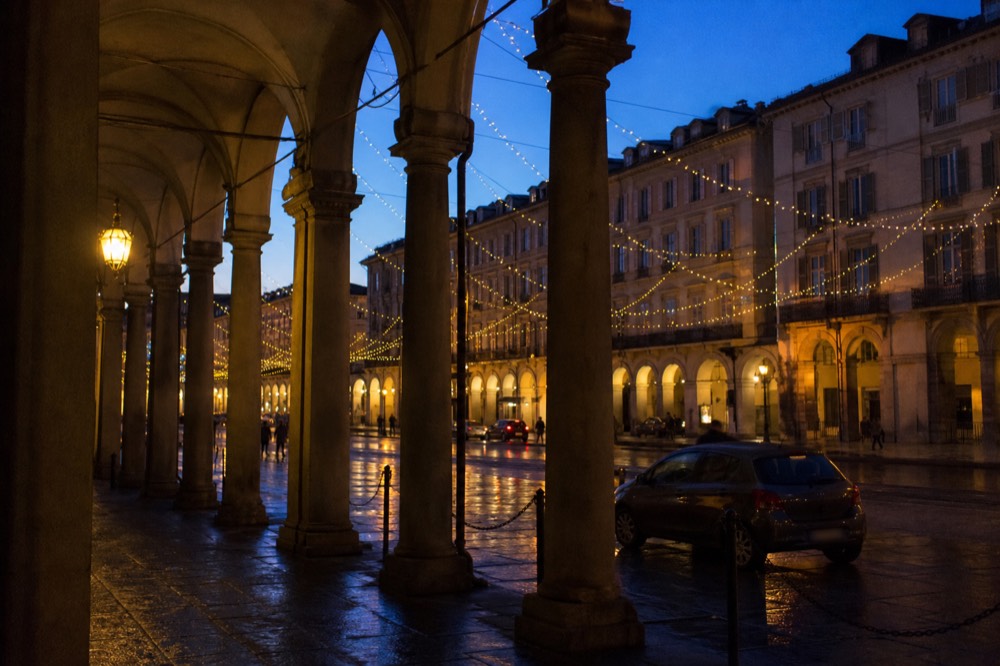
September into early November is the best window to combine the two, and the event calendar is the reason: Luci d'Artista lights Turin from 22 October 2026 to 10 January 2027, the Torino Film Festival runs 24 November to 2 December 2026, and the Langhe harvest and truffle season sit in the same weeks. You get the city in its museum-and-lights mood and the hills in their most vivid one, without the summer heat.
May is the other strong option. It showed the highest hotel occupancy in Turin in 2025 at 77.7 percent and the highest monthly arrivals at over 177,800, so you are sharing the city, but the weather is kind to both street and saddle, and the Salone del Libro in mid-May 2027 is already scheduled if books are your thing.
Avoid August if you can. It is the Ferragosto closure period, when family-run cellars and restaurants across the region shut, and the 2026 heat set records a bike saddle does not want to revisit. Winter works for the city, since Luci d'Artista makes Turin one of Italy's best-lit December destinations, but the hills go quiet and damp, November being the wettest month at Alba.
One planning note worth its own paragraph: historic trains are entering the wine-country calendar. Fondazione FS is running a historic Milan-Alba train on Sundays 11, 18 and 25 October 2026 in Gran Confort carriages, and a historic Turin-Canelli train on Sundays 1, 8, 15 and 22 November 2026 on Centoporte stock. For a Turin-based rider those November dates are a direct line into the truffle season without a hire car.
The Verdict For A Wine-Hills Visitor
Turin earns two nights of your Piedmont trip, taken at the front end, and it earns them on museums, food and arrival logistics rather than scenery. The city is cheap by Italian big-city standards, flat and friendly under a bike, and its autumn calendar overlaps exactly with the Langhe's best weeks. Skip it only if your trip is four days or fewer, in which case the hills should have every one of them.
The honest failure mode is not skipping Turin, it is under-scheduling it. A rushed half-day between the airport and Alba produces stress and a motorway view, while one clear day and a morning bike ride produce the version of the city people remember. Piedmont Bike Tours exists because the hills are the headline act, but the opening act is better than its billing.
If the plan is coming together, the two decisions that matter next are how to split the calendar, which our best time to visit Piedmont guide handles in detail, and how to get from the city to the hills, covered in day tours from Turin into the wine hills.
These are the questions wine-hills visitors ask most often about Turin, answered with the same figures used throughout this verdict: how many days it deserves, what it costs, whether the cycling is real, and when the city and the vineyards are both at their best.
Common Questions About Turin
is turin italy worth visiting?
Yes. For a visitor whose main reason for coming to Piedmont is the wine hills, Turin earns one to two days: the Museo Egizio, the Savoy centre, the food culture, and cheap, flat riding. The average tourist stay is 2.5 nights, which is about the right dose.
How many days do you need in Turin?
One full day covers the essentials; two lets you add a bike tour and the royal residences. Past three days, the Langhe starts outcompeting the city for a wine-focused visitor. Average tourist stay in Turin and its first belt was 2.5 nights in 2025.
Is Turin expensive?
No. A city transport ticket is €1.90 in the app, the Museo Egizio is €18, and the tourist tax tops out at €5 a night at a 5-star hotel. Milan's 2026 cost basket of 693 euros is the starkest comparison, and Turin sits far below it.
Is Turin good for cycling?
Yes. The centre is flat and gridded, the Po riverside is car-free, Biciplan sensors counted 8.9 million cyclist passages in the most recent full year, and the city targets 85 km of new protected lanes. A guided city bike tour runs from $35.
When is the best time to visit Turin?
September through November: harvest and truffle season in the hills, plus Luci d'Artista lighting the city from 22 October 2026 to 10 January 2027. May is the spring alternative, though it is the busiest hotel month.