Wine Tours In Piedmont Italy: Formats, Costs And What Is Included
Piedmont wine touring runs from a €25 cellar tasting to a full-day guided ride through the Barolo hills. This page sets out what each format costs, what it includes, and the point at which a bike tour becomes both cheaper and better than a minivan.
 By Chiara Barbero, Piedmont Bike Tour Guide and Langhe Cycling Specialist
Short answer
A cellar tasting with a visit in the Alba area is listed from €25-50 per person, while guided e-bike wine tours run from $46 to $208 depending on length and region. A guided minivan wine day typically costs more than a comparable e-bike tour once you add tasting fees, and the bike version covers the same hills at a pace the villages are actually built for.
The vineyard landscape of Langhe-Roero and Monferrato entered the UNESCO World Heritage List in 2014, and wine touring has been scaling up ever since: the area recorded 761,274 arrivals and over 1.7 million overnight stays in 2025, growth of 9.6% and 11.9% on the year before. With that growth has come a crowded market of tour formats, minivan hops, cellar visits, e-bike rides, walk-in tastings, and prices that swing wildly for what looks, on a thumbnail, like the same product. This page breaks the market into its real formats, prices each one honestly, and answers the question most comparison pages dodge: when does putting your group on bikes cost less than putting them in a van, and give you a better day anyway?
What Does A Wine Tour In Piedmont Cost By Format?
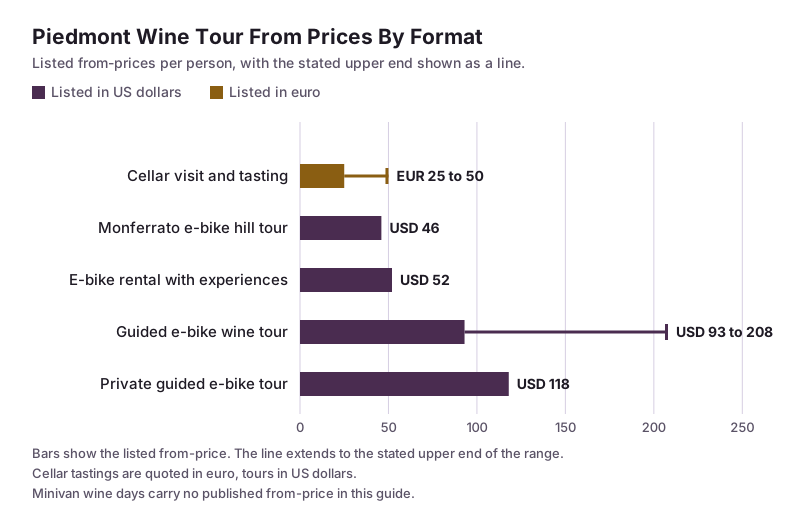
The honest range runs from about €25-50 per person for a cellar visit with tasting in the Alba area, up to $250 for a full guided mountain-bike wine day, with the popular guided e-bike formats clustered between $93 and $208. Those are from-prices on live listings, not averages, and they move with season and group size. What the number buys you varies more than the number itself: a €25 tasting gets you a seated flight and a cellar walk, while a $186 guided e-bike day typically bundles the bike, a guide, at least one tasting and often lunch or a picnic stop.
The cheapest entry points are the rental-plus-experience products. An e-bike rental with food and wine experiences in the Langa del Barolo or in Barbaresco is listed from $52 per person for roughly a full day, and that price covers the bike and the framework of suggested stops, with tastings usually paid as you go. At the other end, private e-bike tours of the Langhe del Barolo or Langhe del Barbaresco run from $118 per person for six to seven hours with a dedicated guide, and the premium scenic tours around Barolo village reach $186 for about five hours.
Where the money actually goes is worth understanding before you book anything. A guided tour price is mostly guide time and logistics; the wine itself is a smaller line than most people expect. A standalone tasting fee in this region is a €25-50 item, listed from on current operator pages, so a tour charging $150-plus is charging largely for the route, the story and the schedule, not the pour. That is often worth paying for. But knowing the split stops you overpaying for a format that is really just a tasting with a shuttle.
Which Wine Tour Formats Exist, And What Does Each One Include?
There are five working formats: the walk-in cellar tasting, the minivan wine day with driver-guide, the self-guided e-bike rental with suggested stops, the guided e-bike wine tour, and the private guided tour, and each includes a genuinely different bundle. The tasting is wine and a cellar walk, nothing else. The minivan day adds transport and a route but keeps you inside a vehicle between stops. The rental gives you the bike and a suggested itinerary and leaves every tasting decision to you. The guided e-bike tour adds a route, a story and usually one included tasting or picnic. The private tour buys you the guide's undivided time and a route tuned to your group.
| Format | Typical length | Listed from-price | Usually includes | Usually excludes |
|---|---|---|---|---|
| Cellar visit and tasting | 1-2 hours | €25-50 per person | Guided cellar walk, tasting flight | Transport, food beyond snacks |
| Minivan wine day | 4-8 hours | varies by operator | Driver-guide, 2-4 cellar stops | Some tasting fees, lunch |
| E-bike rental with experiences | ~1 day | $52 per person | E-bike, route suggestions, partner stops | Tastings, guide |
| Guided e-bike wine tour | 4-7 hours | $93-208 per person | E-bike, guide, at least one tasting, often picnic or lunch | Extra tastings, hotel transfer |
| Private guided e-bike tour | 6-7 hours | $118 per person | Dedicated guide, custom route, tasting | Lunch at some operators |
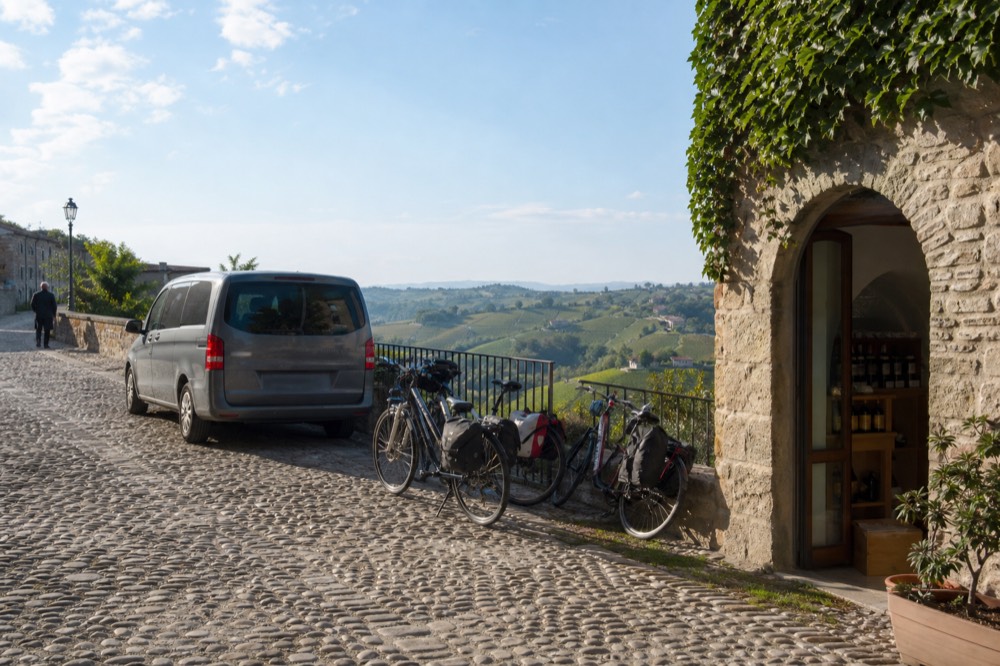
The guided e-bike tier is where the value logic gets interesting, because the bundle is doing double duty. A tour like the Barolo Wine Region e-bike day, roughly six hours from $93 per person with 12 reviews on the listing, includes a picnic and rides the vineyards between the villages rather than driving past them. The shorter scenic Barolo tour from $186 leans on a curated route and tasting stops. The Langhe Slow tour between Serralunga d'Alba and Barolo, from $157 for about five and a half hours, is built specifically around the two UNESCO-listed village centres. None of these is "a tasting with wheels": each is a route first and a wine itinerary second.
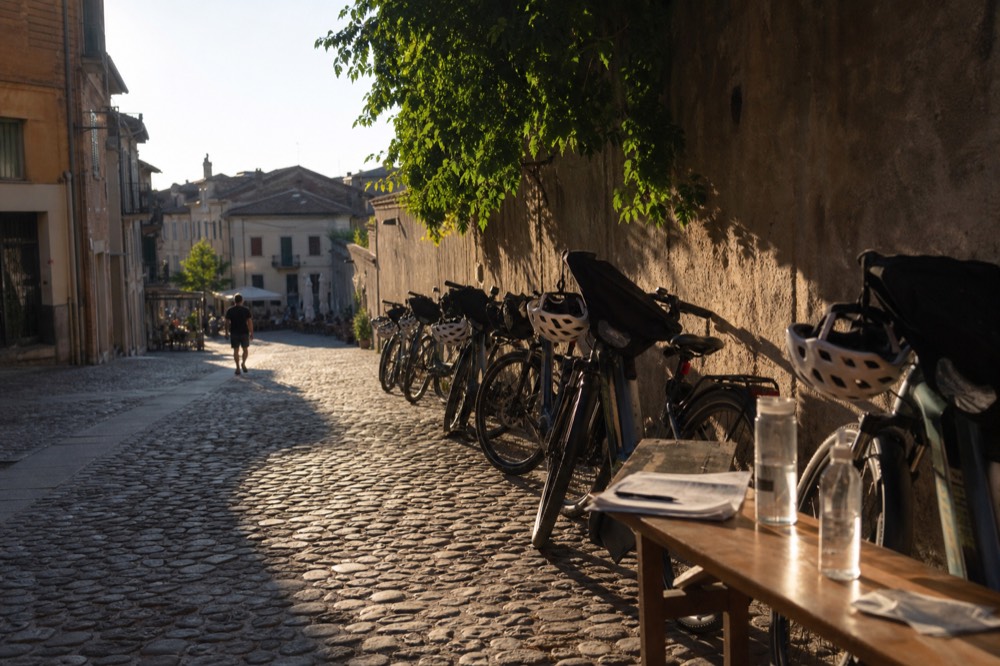
The selection above spans the format spread deliberately: a city bike tour for a Turin base day, an e-bike city option at the same price point, and a hills-and-vineyards e-bike day at the budget end of the wine format. The point of showing all three is that the jump from a €25 tasting to a $46 vineyard ride is smaller than most travellers assume, and the ride buys you a landscape the tasting room cannot.
When Do Bikes Beat A Minivan For Wine Touring?
Bikes beat a minivan the moment your day is about the space between the cellars rather than the cellars themselves, and in the Langhe that space is the whole point: the villages sit 6 to 20 km apart, linked by vineyard roads a van cannot use and a bike fits perfectly. The gap between Barolo and La Morra is about 6 km; Barolo to Monforte d'Alba about 6.8 km; every famous wine village sits within roughly 20 km of Alba. A minivan day drives those distances in minutes on main roads, while a bike day spends the same hours inside the vineyards on the strade bianche and back lanes that make the region what it is.
Cost is the second argument, and it is starker than the industry likes to admit. A minivan wine day for two people typically prices out well above a guided e-bike tour once you count the tasting fees the van format often leaves you to pay at each stop, and the van never gets cheaper per person the way a group ride does. The e-bike rental-plus-experience format from $52 per person is cheaper than essentially every guided van product on the market, and even the premium guided e-bike days top out around $208. The pedal-assist part matters too: the Barolo villages loop from Alba carries roughly 877 m of climbing over about 68 km, and an e-bike flattens that for riders who would otherwise be priced into a van by fitness alone.
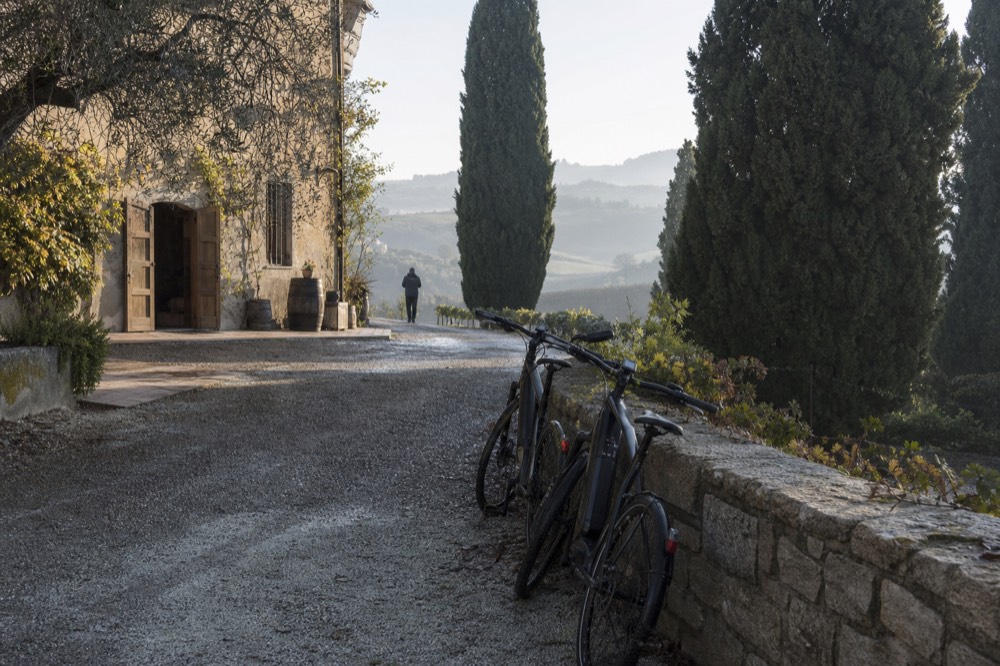
The honest counterweight is time and volume. A van can cover four or five cellars in a day; a bike day realistically covers two or three plus a long lunch, because you are spending real hours in the saddle. If your goal is to tick off a list of famous producers, the van wins. If your goal is to understand why the same grape tastes different on the Serralunga side than the La Morra side, the bike wins, because you feel the soil change under you. Most first-time visitors to the Langhe want the second thing and book the first.
What Do Cellar Visits And Tastings Cost In The Langhe?
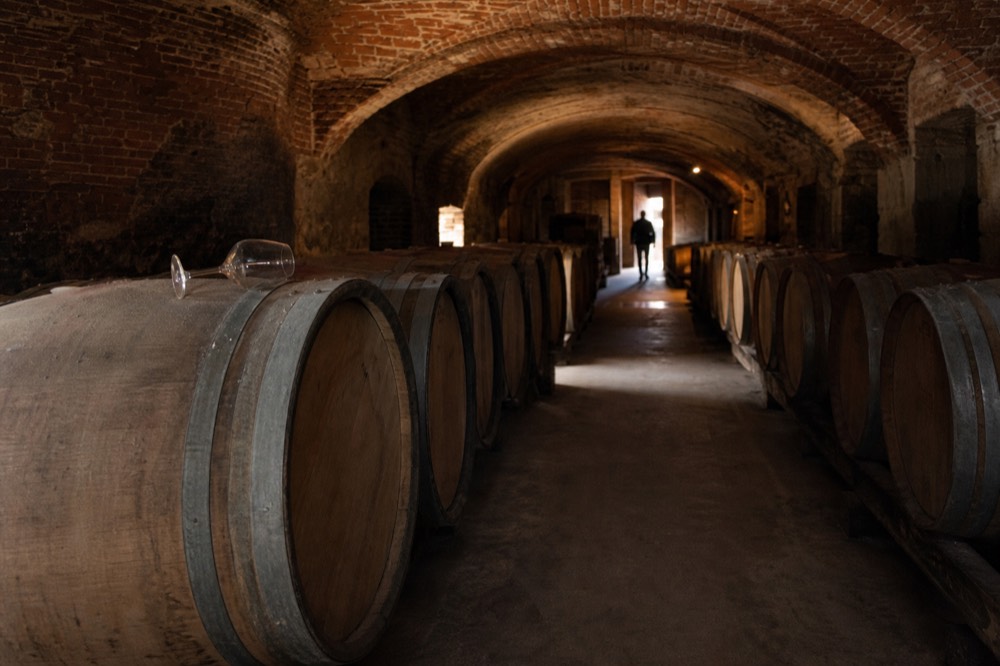
A cellar visit with tasting in the Alba area is listed from €25-50 per person, and that range is the planning number to carry: check the specific cellar's own page before you go, because fees vary by flight, by vintage depth and by whether food is included. Those figures come from current operator listings, a spread of from-prices rather than a survey, so treat them as a budgeting band, not a fixed tariff. Deeper flights, older Barolo vintages and full menus push toward and past the top of the band; a short standing tasting at a family cellar can sit below it.
Festival formats can undercut everything. Festa del Vino in Alba's historic centre runs on 20 and 27 September, with the Via del Vino tasting at €18 including the glass and bag, which is a genuinely cheap way to taste across many producers in one evening. Cantine Aperte, the late-May open-cellars weekend, puts tastings across the Langhe at similar accessible price points. Neither replaces a proper cellar visit, but both let you calibrate what you like before you spend €50 on a single producer's flagship room.
Barolo, Barbaresco, Roero Or Monferrato: Which Should Your Tour Cover?
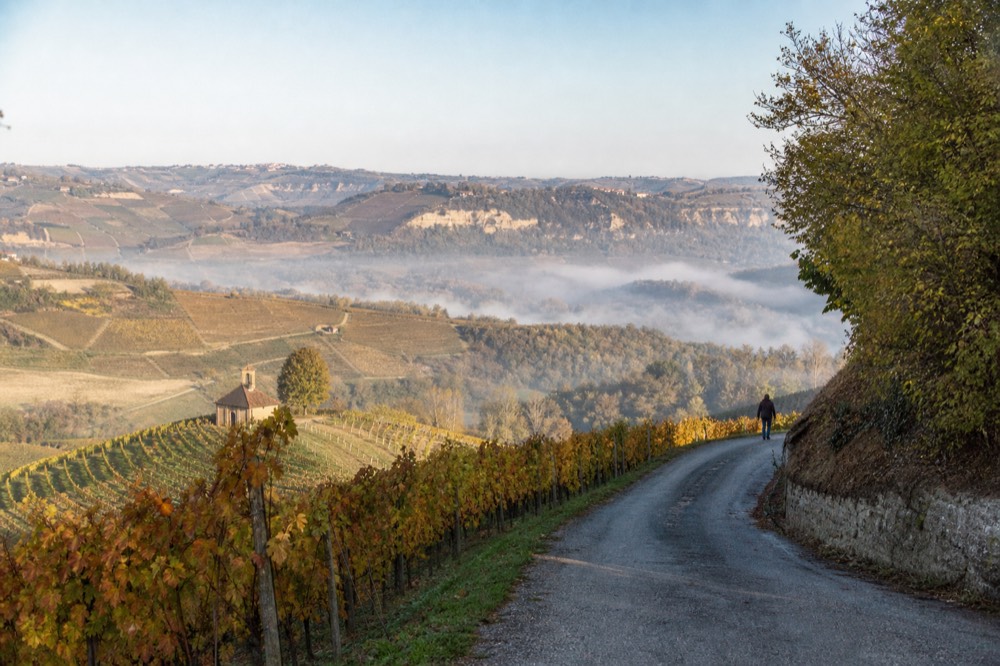
Choose by wine style and riding appetite: Barolo for the deepest, longest-lived reds and the most famous villages; Barbaresco for a softer, shorter version of the same grape on quieter roads; Roero for Arneis whites and sandy, cliff-cut scenery; Monferrato for Barbera, lower prices and the fewest other visitors. They are not interchangeable, and a tour that claims to cover all four in a day is a driving day, not a wine day. The geography enforces the choice: Barolo's 11-commune zone and Barbaresco's four-commune zone sit on opposite sides of the Tanaro valley from the Roero, and Monferrato spreads east toward Asti.
The Barolo zone runs to 11 comuni, of which only three, Barolo, Castiglione Falletto and Serralunga d'Alba, lie entirely inside it, and its wine must age a minimum of 38 months, 18 of them in wood, counted from 1 November of the harvest year. Barbaresco, from the entire territory of Barbaresco, Treiso and Neive plus part of Alba, needs 24 months with 9 in wood. That cellar-time gap is the whole character difference between the two rides, and our Barolo vs Barbaresco comparison breaks it down by route as well as by glass.
| Area | Signature wine | Riding character | Tour price signal |
|---|---|---|---|
| Barolo zone | Barolo DOCG, 100% Nebbiolo | Rolling to steep, famous villages 6-20 km apart | Guided e-bike days from $93-186 |
| Barbaresco zone | Barbaresco DOCG | Quieter lanes, shorter climbs, Neive and Treiso | Private e-bike tours from $118 |
| Roero | Roero DOCG, Arneis whites | Sandy lanes under the Rocche cliffs | Covered by combined Langhe-Roero days from $208 |
| Monferrato | Barbera, Asti Spumante | Softer hills, least-visited villages | E-bike hill tours from $46 |
Monferrato is the budget sleeper of the four. The Cisterna d'Asti e-bike tour through hills and vineyards runs about four hours from $46 per person, which is the lowest from-price on any guided vineyard ride in the roster, and the Monferrato scenic bike tour with an infernot secret-cellar visit starts at $75 for a half-to-full-day format. The infernot, the hand-dug underground cellars that give the Monferrato its UNESCO component, are something the Barolo zone simply does not have.
How Do You Reach The Wine Hills Without A Car?
You can reach Alba by train from Turin in a little over an hour and a half on the direct Torino-Bra-Alba line, and from Milan with one change, typically at Torino Porta Susa; once in Alba every wine village is within about 20 km, and a bike travels on regional trains for a €3.50 supplement valid until 23:59 of the ticket date. The supplement applies to assembled bikes on Regionale trains marked with the bike pictogram, e-bikes included, and a folded folding bike travels free. The Alba-Asti line, reopened in September 2023, links the two wine towns along the flat Tanaro valley.
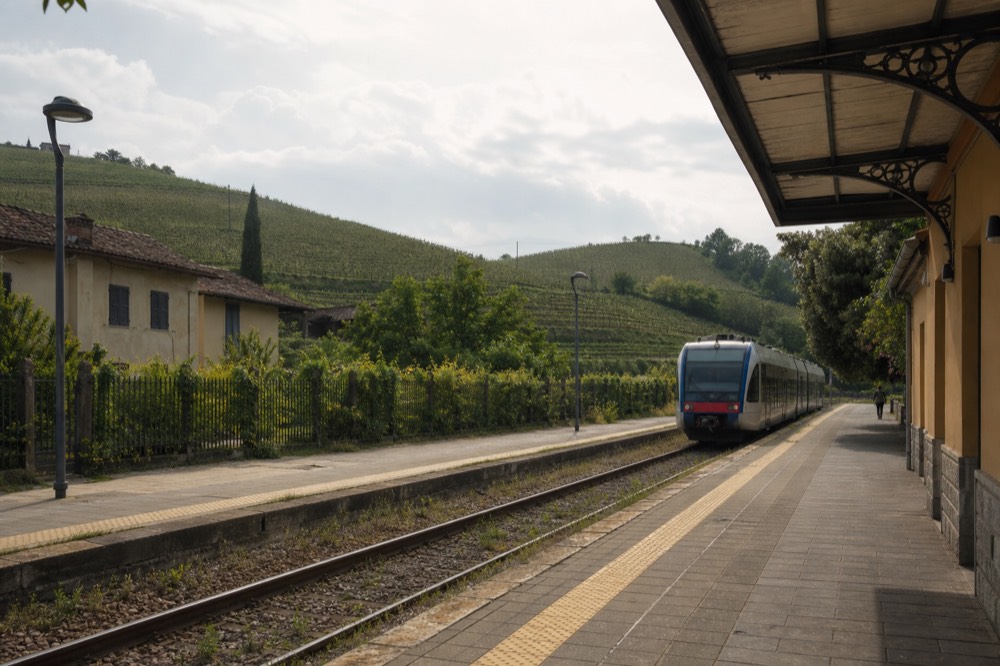
For the autumn season there is a new option worth knowing about: Fondazione FS historic trains run from Milan to Alba on the Sundays of 11, 18 and 25 October, and from Turin to Canelli on the Sundays of 1, 8, 15 and 22 November, aimed at the truffle and wine crowds. Treat the train as the experience and book any riding separately, because bike carriage on these services is not confirmed. Our guide to getting to Alba covers the timetables and airport transfers in full detail.
The practical chain for a car-free wine day is simple: train to Alba, bike from the station or a rental shop, ride one loop, train back. The Tanaro valley between Alba and Asti is effectively flat, about 31 km with almost no climbing, so even the transfer legs can be ridden. If you are planning around the harvest or the truffle fair, the best time to visit Piedmont guide maps the calendar against the weather.
Can You Start A Wine Tour From Turin?
Yes, and it is the format most visitors get wrong: Turin itself is a strong bike city with three guided tours from $35-45, and pairing a Turin riding day with a separate train-and-e-bike day in the Langhe usually beats a single long van excursion from the city. The Turin City Highlights guided bike tour runs about three hours from $35 per person, rated 4.6 across 497 reviews; the Turin E-Bike city and viewpoint tour runs about three hours from $45, rated 4.9 across 371 reviews; the longer highlights and hidden-gems format runs 3.5 hours from $45, rated 4.8 across 144 reviews. Those review bases are large enough to trust the pattern.
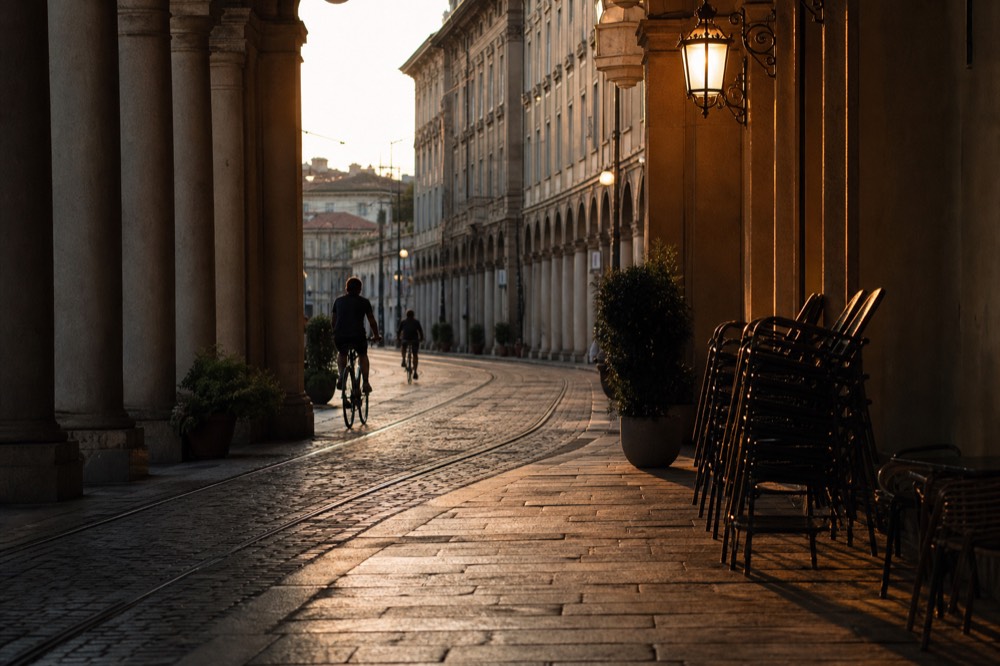
The logic is time. Turin sits about 70 km from Alba, roughly 90 minutes by road, so a wine excursion from the city spends three of its hours on the same motorway in both directions. Doing the city by bike on day one, then taking the morning train to Alba and riding the vineyards on day two, gives you more wine, more riding and less ring road for the same money. The Turin City Highlights tour is the natural day-one pick: short, cheap, and it teaches you the city's layout fast.
If the e-bike format suits your group better in the city too, the viewpoint tour covers Turin's best panorama in about three hours from $45, and the pedal-assist habit carries over nicely to the Langhe day, where the same assist flattens the 877 m Barolo loop. Riding the city first also calibrates your group's pace before you commit to a full vineyard day, which is worth more than it sounds.
How Do You Book A Piedmont Wine Tour, And What Should You Check First?
Check four things in order: what the price actually includes, whether tastings and food are bundled or paid on arrival, the cancellation window on the operator's live listing, and the total riding distance against your group's fitness, even on an e-bike. The from-price on a listing is the floor, not the bill. A $93 picnic tour and a $186 tasting tour are both honest products, but they are different products, and the difference lives entirely in the inclusions list.
| Check | Why it matters | Where to look |
|---|---|---|
| Included tastings | The biggest swing between similar prices | Tour description on the live listing |
| Food and picnic | Lunch can be a €20-40 per person add-on elsewhere | Inclusions section |
| Cancellation terms | Langhe weather turns, plans turn with it | Listing's policy line |
| Riding distance and climbing | Even e-bike days involve real hours in the saddle | Itinerary details |
| Meeting point | Some tours start in Alba, others at a village cellar | Practical information |
Booking windows matter seasonally. The harvest weeks from late September into October and the truffle fair window from 10 October to 6 December are the busiest of the year in Alba, and summer occupancy data shows May through August now carrying half of annual visits, so the region no longer has a quiet month in the way it once did. Book guided formats early for those windows, and expect cellar tasting slots at the best-known producers to need advance reservation in any case. For a deeper look at which cellars actually welcome visitors and how their offers differ, see our Piedmont wineries guide.
One last planning note that saves real money: the e-bike rental-plus-experience format, from $52 per person in both the Langa del Barolo and Barbaresco, lets a confident group self-guide and pay tastings individually, which usually lands below the guided price for the same stops. You trade the guide's knowledge and the guaranteed cellar appointments, and for riders happy to navigate, that is a trade worth making. Piedmont Bike Tours exists largely because this arithmetic works: the hills are compact, the trains reach them, and the bike is the tool the landscape was waiting for.
The questions below cover the five things readers ask most: what a tour costs by format, whether bikes genuinely beat a minivan, what a tasting alone runs, whether Turin works as a base without a car, and which wine zone to pick first. Each answer repeats the planning figures from the body of this guide, so you can scan the summaries without rereading the whole page. If a number here needs a decision behind it, the relevant section above carries the full reasoning.
Common Questions About Wine Tours In Piedmont
How much does a wine tour in Piedmont cost?
Cellar visits with tasting in the Alba area are listed from €25-50 per person. Guided e-bike wine tours run from $46 to $208 depending on length and region, e-bike rental with food and wine experiences starts at $52 per person, and private guided e-bike tours start at $118 for six to seven hours.
Is a bike wine tour better than a minivan wine tour?
It depends on your goal. A minivan covers more cellars in a day; a bike spends the day inside the vineyards on roads a van cannot use, and the famous villages sit only 6 to 20 km apart. On cost, guided e-bike tours frequently undercut comparable guided van days, and the rental-plus-experience format from $52 is cheaper than almost every van product.
What does a wine tasting cost in the Langhe?
Plan for €25-50 per person for a cellar visit with tasting in the Alba area, listed from on current operator pages. Festival formats are cheaper: the Via del Vino tasting at Alba's Festa del Vino is €18 including the glass and bag. Always check the specific cellar's own page for its current fee.
Can you do a wine tour from Turin without a car?
Yes. Direct trains reach Alba from Turin in a little over an hour and a half, bikes travel on regional trains for a €3.50 supplement, and every major wine village is within about 20 km of Alba. Many visitors pair a Turin city bike tour from $35 with a separate train-and-e-bike day in the Langhe.
Which wine area should a first tour cover, Barolo or Barbaresco?
Barolo for the famous villages and the longest-lived reds, Barbaresco for quieter roads and a softer version of the same Nebbiolo grape. Barolo must age 38 months and Barbaresco 24, which shapes both the price and the character of what you taste. The two zones are close enough that a single well-planned day can touch both, but two half-days ride better than one rushed whole one.