What Is The Difference Between Barolo And Langhe Nebbiolo?
Barolo and Langhe Nebbiolo both come from the Nebbiolo grape in Piedmont's Langhe hills, but they differ in ageing, price, and strict production rules. Here's what that means for your glass and your bike ride.
 By Chiara Barbero, Piedmont Bike Tour Guide and Langhe Cycling Specialist
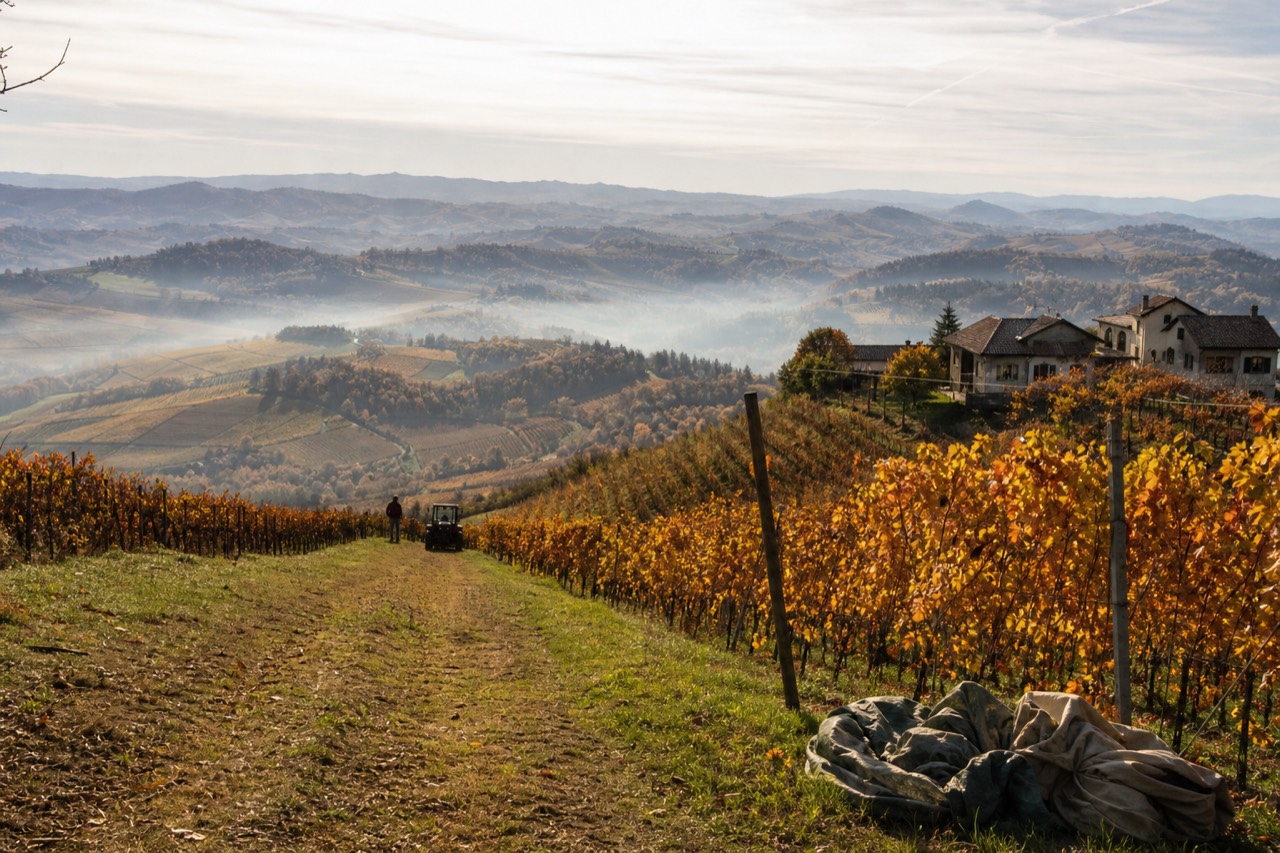
A Barolo and a Langhe Nebbiolo can be made from the same grape, by the same winemaker, from vineyards a few hundred metres apart. One costs $50, the other $25. The difference is not in the fruit but in a set of rules that govern where the vines grow and how long the wine sleeps in a cellar. For anyone planning a ride through the Langhe, knowing that difference turns a wine list from a puzzle into a map.
What Is The Difference Between Barolo And Langhe Nebbiolo?
Barolo is a DOCG wine that must be 100% Nebbiolo from 11 designated communes, aged at least 38 months (18 in wood) before release. Langhe Nebbiolo DOC is a broader appellation that can use Nebbiolo from a wider area, including younger vines or declassified Barolo fruit, and has no minimum ageing requirement, making it ready to drink sooner and often half the price.
The rulebook behind these two wines sits inside the same Consorzio di Tutela Barolo Barbaresco Alba Langhe e Dogliani, an organisation that protects nine denominations across the Langhe. Barolo is the most famous of them, and the most tightly regulated. Its production zone covers the entire territory of Barolo, Castiglione Falletto and Serralunga d'Alba, plus parts of Monforte d'Alba, Novello, La Morra, Verduno, Grinzane Cavour, Diano d'Alba, Cherasco and Roddi. That is 11 comuni, but only three are wholly inside the zone. Langhe Nebbiolo DOC, by contrast, draws fruit from a much larger area that stretches across the Langhe hills and can include grapes grown just outside the Barolo boundary, or from younger vines within it.
The ageing rules are where the two wines really separate. A Barolo must spend at least 38 months in the cellar, counted from 1 November of the harvest year, with a minimum of 18 months in wood. A Barolo Riserva needs 62 months. Langhe Nebbiolo has no such obligation. A producer can pick Nebbiolo in September 2026 and sell a Langhe Nebbiolo the following spring, while the same fruit destined for Barolo sits in barrel for years. That difference in time is the single largest driver of price. It also explains why Langhe Nebbiolo is often the wine a winemaker pours when you visit the cellar: it is the finished article, ready to drink, while the Barolo from the same vintage is still a work in progress.
| Rule | Barolo DOCG | Langhe Nebbiolo DOC |
|---|---|---|
| Grape | 100% Nebbiolo | At least 85% Nebbiolo (often 100%) |
| Production zone | 11 comuni (3 entirely, 8 partially) | Broader Langhe area, including declassified Barolo fruit |
| Minimum ageing | 38 months (18 in wood) from 1 Nov of harvest | None |
| Riserva ageing | 62 months | Not applicable |
| Typical release | 4–5 years after harvest | 1–2 years after harvest |
| Vineyard area (2025) | 2,288 ha | 2,971 ha |
| Price range (retail) | $40–$100+ | $15–$35 |
The vineyard area figures tell a story of their own. Barolo's 2,288 hectares grew 10.6 percent in the decade to 2025, but Langhe Nebbiolo DOC more than doubled its footprint over the same period, from 1,476 ha to 2,971 ha. Much of that expansion came from producers planting Nebbiolo on sites that sit outside the historic Barolo zone, or from younger vines inside it that are not yet old enough to qualify for the DOCG. The result is a wine that carries the same grape and often the same winemaking hand, but without the long wait and the premium price.
A practical consequence for anyone riding the Langhe is that the same cellar door often pours both wines. A producer in La Morra might show you a Langhe Nebbiolo from a young plot on the valley floor, then a Barolo from a 40-year-old vineyard on the hillcrest. The difference in the glass is a lesson in terroir, and the price gap on the shelf makes Langhe Nebbiolo the bottle many visitors take home by the case.
One nuance worth knowing when you read labels: the up to 15 percent of a Langhe Nebbiolo blend that is not Nebbiolo must still come from grapes approved for Langhe DOC wines, so the wine stays firmly rooted in the local palette rather than opening the door to anything. The DOC was created in 1994, which makes it a relative newcomer compared with Barolo's long history, and its rise since then tracks the broader boom in Langhe tourism. For visitors, this means the category is well established in local enotecas and restaurant lists, not a niche curiosity.
The style in the glass differs as much as the rules on paper. Langhe Nebbiolo is typically approachable in its youth, with bright red fruit and softer tannins, and it pairs easily with everyday Piedmontese dishes without the decanting that a young Barolo usually demands. Barolo, by contrast, is built for the long haul: it can age for decades, and many producers hold bottles back until the tannins have settled. If you are planning a cellar purchase on your trip, the common advice from producers is to buy the Langhe Nebbiolo to drink over the next few years and the Barolo to lay down.
Why Does The Same Producer Make Both Barolo And Langhe Nebbiolo?
A winemaker uses Langhe Nebbiolo as a way to bottle the character of Nebbiolo without the cost and wait of Barolo. It can come from younger vines inside the Barolo zone that do not yet qualify for the DOCG, from vineyards just outside the boundary, or from a vintage where the fruit did not meet Barolo's stricter selection criteria.
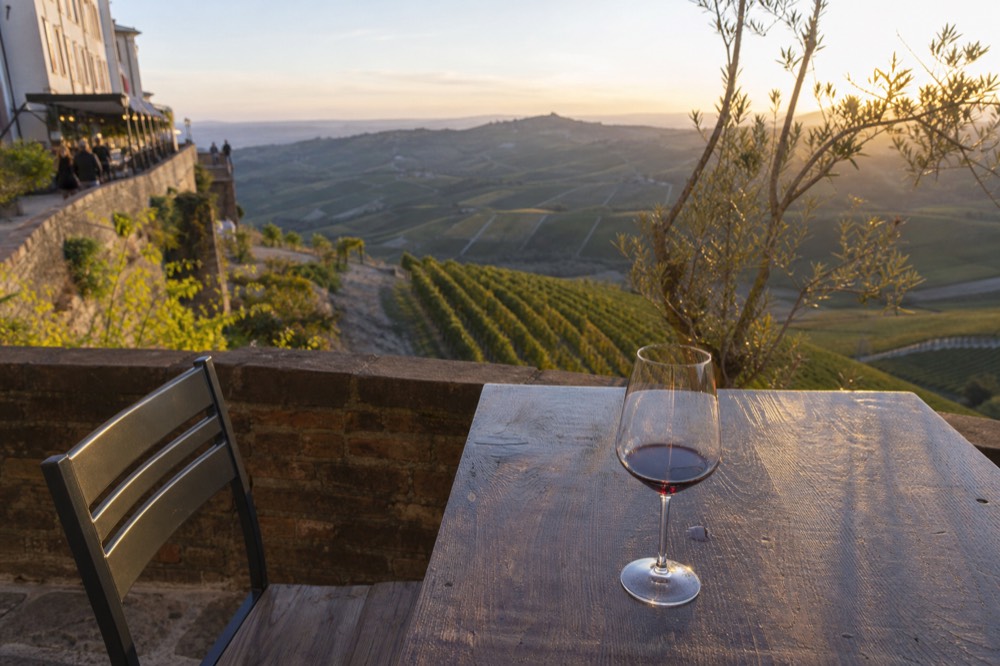
This is not a second-class wine. Many of Piedmont's most respected names, including producers whose Barolo sells for triple-digit prices, release a Langhe Nebbiolo that critics score in the low 90s. The 2022 vintage, previewed at Grandi Langhe 2026 in Turin, saw roughly a quarter of the Barolos score 95 points or higher, but the same event poured Langhe Nebbiolos that were described as open, aromatic and immediately enjoyable. The difference is stylistic as much as regulatory: Barolo is built for the cellar, Langhe Nebbiolo for the table tonight.
The economics reinforce the pattern. Barolo requires a producer to tie up capital in barrels and bottle stock for four years or more. Langhe Nebbiolo turns fruit into cash in 18 months. When the Consorzio voted in June 2026 to cut yields by 10 percent for Langhe Nebbiolo and Barbera d'Alba, it was partly a response to rising stocks and falling bulk prices: Piemonte wine stocks rose 8.2 percent by July 2026 to 45.6 million hectolitres, and Nebbiolo grape prices dropped from €4.30 to €2.70 per kg in a single season. A Langhe Nebbiolo gives a producer a market-ready wine at a time when the fine-wine pipeline is under pressure from tariffs and shifting demand.
What Makes Barolo More Expensive?
The cost of Barolo is driven by land, time, and scarcity. Vineyard land in the top crus can reach seven figures per hectare, the wine must age for at least 38 months before sale, and total production is capped by a fixed area of 2,288 hectares, all of which pushes the price well above Langhe Nebbiolo.
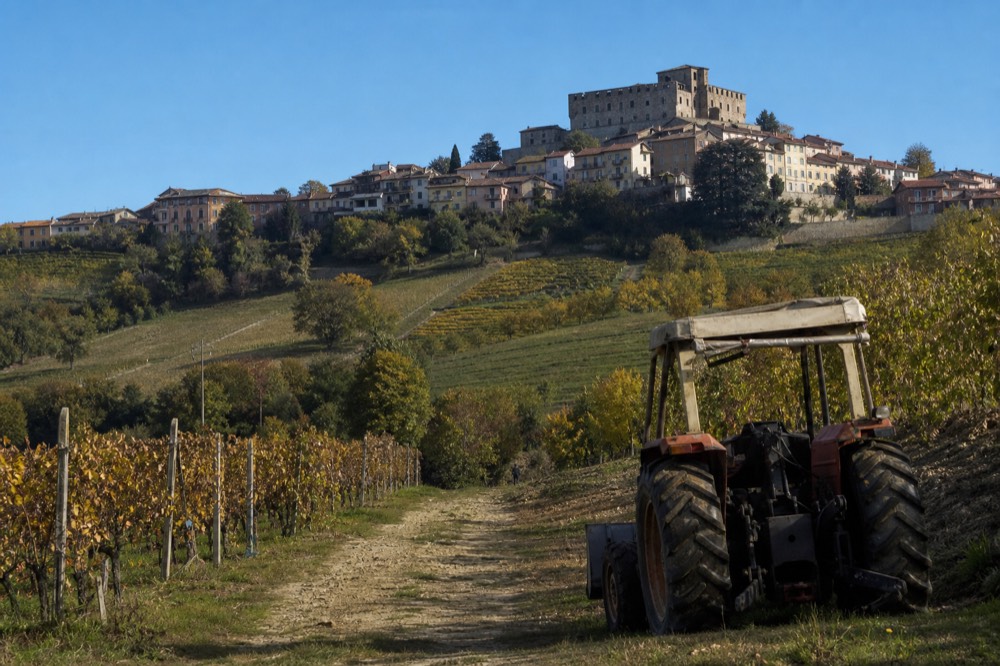
The land inside the Barolo zone is among the most expensive agricultural ground in Italy. While no single published price survey exists for 2026, the Camera di Commercio di Cuneo records wholesale Barolo prices that fluctuated between €635 and €785 per hectolitre in recent months, which translates to roughly €8–10 per bottle before retail markup. Langhe Nebbiolo, without the same land constraint or ageing burden, can leave the cellar at half that cost.
Time is the other multiplier. The 38-month minimum, with 18 months in wood, means a Barolo from the 2022 harvest only reached the market in 2026. Every extra year in barrel adds cost, and the risk of a vintage that does not meet the standard means some years produce less Barolo and more Langhe Nebbiolo. The 2026 harvest, which started early under record heat, is being watched closely by growers who describe the fruit as healthy and concentrated but not as low-yielding as they hoped. If the final selection for Barolo is tight, more Nebbiolo will end up in the Langhe DOC bottle, which is good news for anyone who wants to drink the vintage young.
Proposals to tighten the rules further are already on the table. A modification to the Barolo and Barbaresco disciplinare, published in the Gazzetta Ufficiale at the end of 2025, would require bottling to take place within the production zone. If adopted, it would add another layer of control and cost that Langhe Nebbiolo, with its lighter regulatory touch, would not carry.
How Does The Ageing Rule Change The Taste?
Barolo's 38-month minimum, with 18 months in wood, builds a structure of firm tannins, dark cherry, tar, and roses that needs years in bottle to soften. Langhe Nebbiolo, released without mandatory ageing, shows brighter red fruit, softer tannins, and a more immediate floral character, making it the wine to open while the Barolo from the same vintage is still resting in the cellar.
The difference in the glass is a direct result of the rulebook. Nebbiolo is a grape with naturally high acidity and aggressive tannins. Time in oak softens those tannins and adds layers of spice and vanilla, but it also mutes the primary fruit. A young Langhe Nebbiolo bursts with raspberry and violet, while a young Barolo can feel closed and austere. That is why Langhe Nebbiolo is often described as the "baby Barolo" or the "Barolo for tonight." The 2025 vintage, rated highly by the Consorzio, produced Nebbiolo with excellent balance, and the early tastings of 2022 Barolo at Grandi Langhe 2026 showed wines that will reward patience. For a rider stopping at a cellar door in November, the Langhe Nebbiolo is the one that tastes like the hills in autumn, while the Barolo is a promise of what those hills will give in five years.
The ageing requirement also shapes the rhythm of a visit to the Langhe. A producer might open a 2024 Langhe Nebbiolo that was bottled six months ago, then a 2019 Barolo that has just been released. The contrast is not just in flavour but in the story each wine tells about the vintage. The 2024 Langhe Nebbiolo captures the warmth of that summer, while the 2019 Barolo has had time to integrate that warmth into something deeper. For anyone cycling between the villages, tasting both wines side by side is the quickest way to understand why the rules matter.
Can You Ride Through The Vineyards That Produce Both?
Yes, the Langhe hills are crisscrossed with quiet roads that pass within a few hundred metres of the vineyards that grow Nebbiolo for both Barolo and Langhe Nebbiolo, often on opposite sides of the same ridge. A bike is the best way to see how a few metres of slope or a change in soil can turn one wine into the other.
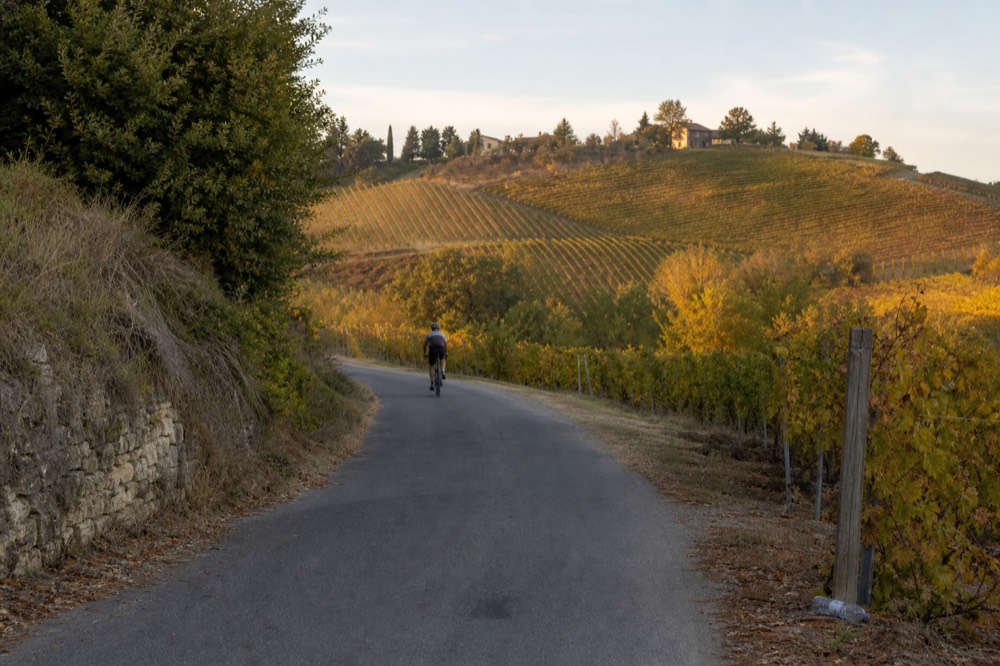
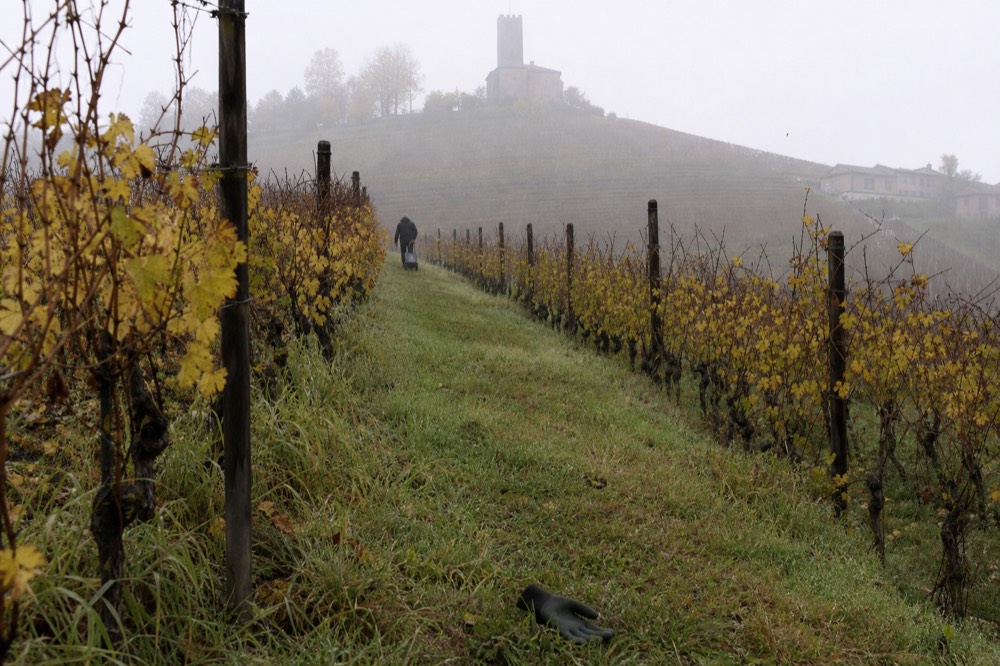
The Barolo villages loop from Alba, a 68 km ride with roughly 875 m of climbing, takes you through La Morra, Barolo, Novello, Monforte d'Alba and Serralunga d'Alba, the core of the DOCG zone. On the same ride you will pass vineyards labelled Langhe Nebbiolo on the lower slopes, where the soil is deeper and the grapes ripen a week earlier. The difference is visible from the saddle: Barolo vines tend to sit on the crests and the sunniest mid-slopes, while Langhe Nebbiolo often fills the hollows and the edges of the appellation.
For a shorter, gentler introduction, the e-bike tours that start from Alba and the surrounding villages let you cover the same ground without worrying about the climbs. A half-day ride can link two or three cellar doors, where you can taste a Barolo and a Langhe Nebbiolo side by side and ask the winemaker why one costs twice as much. The answer is usually a story about a particular vineyard, a decision made in the cellar, and a set of rules that have been in place since 1933.
Piedmont's cycling infrastructure is growing to match the interest. The Piedmont Bike Tours roster includes guided and self-guided options that put you on the roads between Barolo and Barbaresco, and the planned 32.5 km Ciclovia delle Colline Unesco from Alba to Canelli will one day offer a car-free corridor through the same hills. For now, the quiet provincial roads are the real route, and they pass through a landscape where the difference between a $25 bottle and a $50 bottle is measured in metres of elevation and years of patience.
Understanding the difference between Barolo and Langhe Nebbiolo turns a wine list into a map of the Langhe. For a detailed look at the roads that connect these villages, see our guide to Barolo bike tour routes. Whether you choose a guided e-bike tour or a self-guided ride, the hills reward curiosity with every glass.
Common Questions About Barolo And Langhe Nebbiolo
What is the difference between Barolo and Langhe Nebbiolo?
Barolo is a DOCG wine from 11 communes, aged at least 38 months with 18 in wood. Langhe Nebbiolo is a DOC that can come from a wider area, has no minimum ageing, and is typically released younger and at a lower price.
Is Langhe Nebbiolo made from the same grape as Barolo?
Yes. Both are made from the Nebbiolo grape. Langhe Nebbiolo must contain at least 85% Nebbiolo, but in practice most producers use 100% Nebbiolo, often from the same vineyards that supply their Barolo.
Why is Langhe Nebbiolo cheaper than Barolo?
Langhe Nebbiolo avoids the long ageing requirement and the land-cost premium of the Barolo zone. It can be sold a year or two after harvest, while Barolo ties up capital for four years or more.
Can you visit the vineyards where both wines are made?
Yes. Many Barolo producers also make a Langhe Nebbiolo, and their cellar doors are open to visitors. A bike tour through the Langhe is one of the best ways to see the vineyards and taste the wines side by side.
Which one should I buy?
If you want a wine to drink tonight with dinner, choose Langhe Nebbiolo. If you are building a cellar or want the full expression of a single hillside, Barolo is the one to age. Many visitors buy a case of Langhe Nebbiolo for now and a few bottles of Barolo for later.