What Are Some Hidden Gems In Piedmont?
Move beyond Barolo and Alba to discover Piedmont's overlooked villages, reopened fortresses, and quiet cycling routes through Monferrato's wine hills.
 By Chiara Barbero, Piedmont Bike Tour Guide and Langhe Cycling Specialist
What Are Some Hidden Gems In Piedmont?
Piedmont’s hidden gems are the villages, fortresses, and cycling routes that sit outside the Barolo-Barbaresco spotlight: the Bandiera Arancione hamlets of Cella Monte and Verduno, the reopened Forte di Gavi, the Traversella mine museum, and the Ovada wine hills where a CicloDiVino tour pairs tastings with quiet roads. These places have gained new recognition or reopened in the past year, yet they remain almost entirely crowd-free.
Most visitors to Piedmont head straight for the Langhe, and that is exactly why the region’s quieter corners stay so peaceful. The Monferrato hills, the Alta Langa ridges, and the forgotten valleys north of Asti hold a string of discoveries that rarely appear on a first-timer’s itinerary. In the last twelve months alone, several villages have been added to Italy’s most beautiful hamlets list, a Genoese fortress has reopened with new multimedia installations, and a former iron mine in the Valchiusella has been restaged as an accessible museum. For cyclists, Piedmont Bike Tours routes through Monferrato reach many of these spots on roads that see more tractors than cars. The full picture of cycling in Piedmont lays out the region’s riding landscape, but the hidden gems are what make a ride here feel like a genuine discovery.
The honest truth is that Piedmont itself is a hidden gem compared with Tuscany or the Veneto, and inside it, the real discoveries are the places even Italian travellers have not yet marked on their maps. This article collects the ones that have opened, been awarded, or been written up in the last year, and it pairs them with the quiet cycling routes that make them reachable on two wheels.
Which Monferrato Villages Are Worth The Detour?
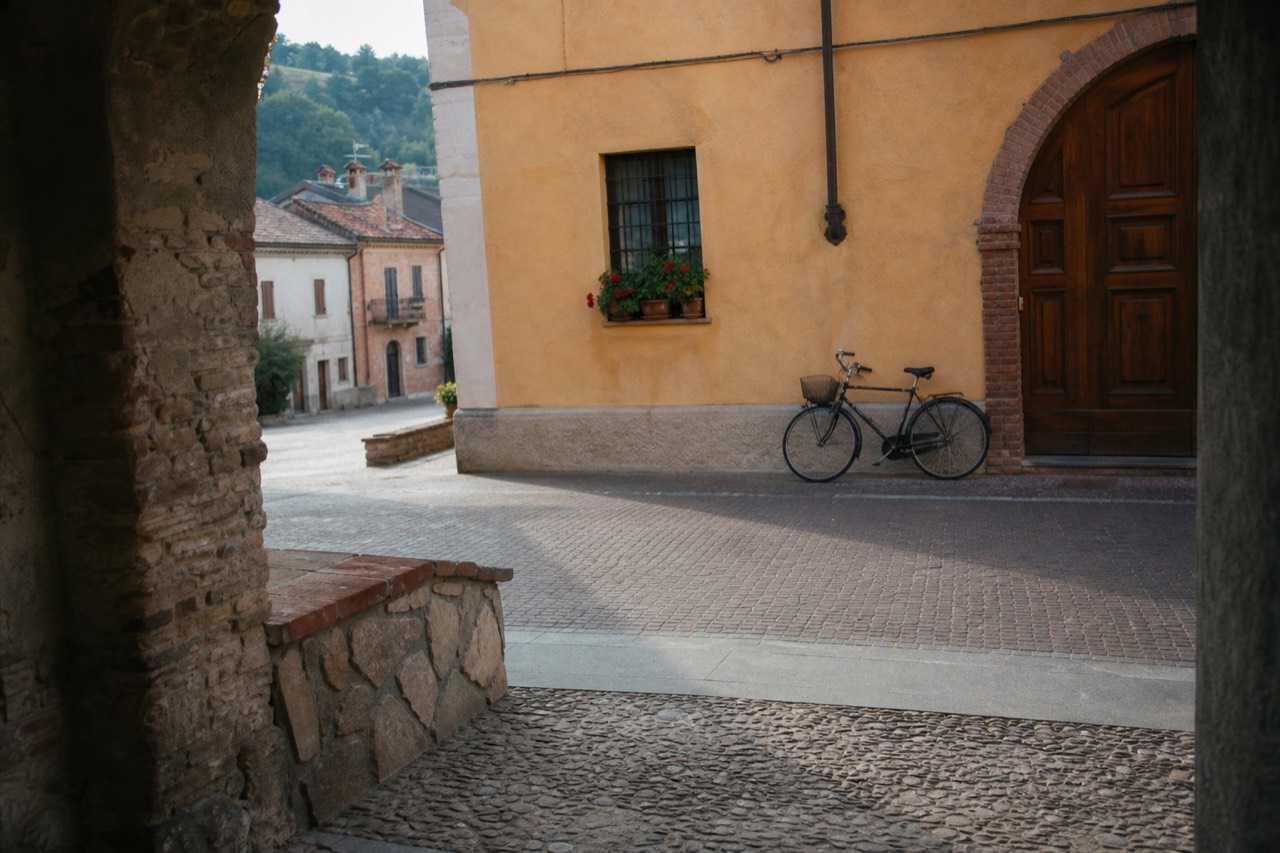
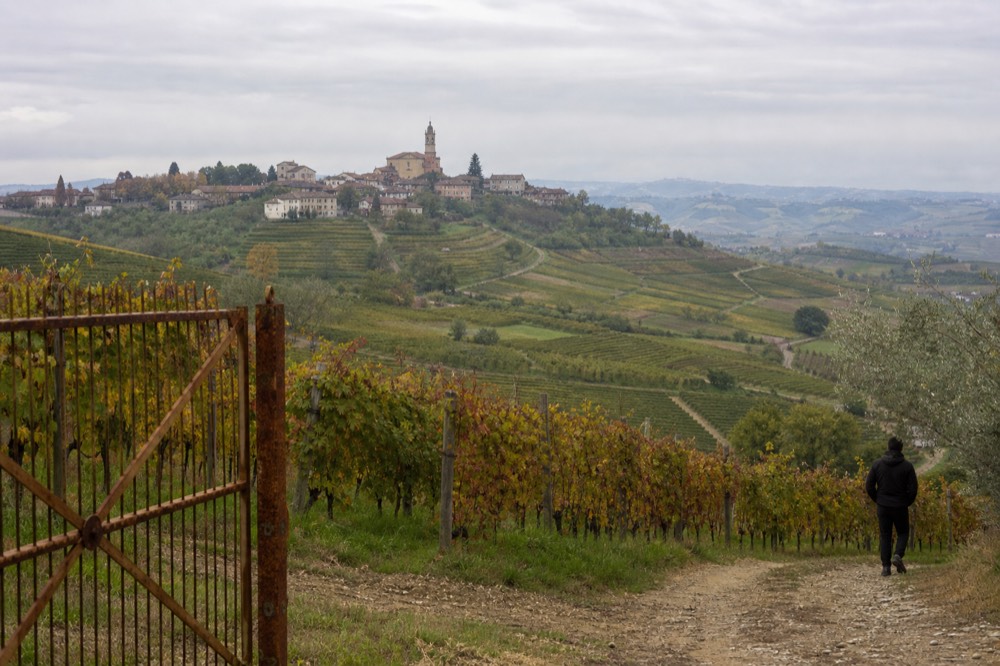
Cella Monte and Verduno received the Touring Club Italiano’s Bandiera Arancione in October 2025, a mark of quality for small inland villages that combine heritage, hospitality, and a lived-in feel. Cella Monte sits among the infernot, the UNESCO-listed underground cellars carved from the local sandstone, while Verduno, on the edge of the Barolo zone, is a hilltop village with a castle, a famous wine, and a fraction of the visitors of its better-known neighbours.
The Bandiera Arancione is not a beauty contest: it is awarded only to comuni with populations in the low thousands that pass a rigorous check on everything from signposting to the availability of local food. Piedmont now has 42 of these flags, the highest regional total in Italy, and the two newest are in the provinces of Alessandria and Cuneo respectively. Cella Monte, in the heart of the Monferrato Casalese, is a place where you can ride past infernot entrances cut directly into the hillside, then stop for a glass of Grignolino in a piazza that feels unchanged for a century. Verduno, meanwhile, produces a tiny amount of Verduno Pelaverga, a light, peppery red that is almost impossible to find outside the village itself.
Another addition came in December 2025, when Borgo del Piazzo in Biella was named a “borgo ospite” of I Borghi più belli d’Italia, the association of Italy’s most beautiful villages. Biella itself sits at the foot of the Alps, north of the rice plains, and its medieval upper quarter, the Piazzo, is a warren of cobbled lanes and porticoed palazzi that looks across to the snow-covered peaks. It is a long way from the Langhe, but for a cyclist willing to ride the quieter roads of the Biellese, it is a genuine discovery.
| Village | Recognition | When | What makes it a hidden gem |
|---|---|---|---|
| Cella Monte (AL) | Bandiera Arancione | October 2025 | Infernot cellars, Grignolino wine, almost no tourists |
| Verduno (CN) | Bandiera Arancione | October 2025 | Pelaverga wine, hilltop castle, on the edge of the Barolo crowds |
| Borgo del Piazzo, Biella | Borgo ospite, Borghi più belli d’Italia | December 2025 | Medieval upper town with Alpine views, far from the wine routes |
What Forgotten Fortresses And Museums Have Reopened Recently?
Recent reopenings bring three off-the-beaten-path attractions to cycling explorers: the 17th-century Forte di Gavi, now with first-ever public access to its upper fort since July 2026; the Traversella mine museum, restaged with an elevator and tactile paths in September 2025; and the world’s first pallapugno museum, opening 9 October 2026 in Niella Belbo.
Forte di Gavi sits on a strategic outcrop above the town of Gavi, about an hour’s ride from the Cortese vineyards that produce Gavi di Gavi. The fortress had been partially closed for years, but the new allestimenti now let visitors walk through the entire complex, including the Alto Forte area that was never accessible before. The reopening was timed for the 400th anniversary of the fortress, and the multimedia route tells the story of its role controlling the road between Genoa and the Po plain. A cyclist riding up from the Gavi wine roads will find the climb steep but short, and the view from the ramparts takes in the whole of the Alto Monferrato.
The Traversella mine museum is a different kind of discovery. The Valchiusella, north of Ivrea, is a valley of chestnut woods and stone villages that feels a world away from the manicured vineyards of the Langhe. The mine operated until it closed in the late 20th century, and the restaged museum now includes an elevator that descends into the galleries, tactile paths for visitors with visual impairments, and a sensory station that recreates the sounds and smells of the working mine. The museum’s own website notes that the restaging was designed to make the site accessible to everyone, and it is one of the few industrial-heritage museums in Piedmont to have done so.
The Ca’ Balon museum in Niella Belbo is not yet open at the time of writing, but its inauguration is scheduled for 9 October 2026, with Prince Albert II of Monaco attending. Pallapugno, or balon, is a traditional sport played with a hard ball and a bare fist, and it has deep roots in the Alta Langhe and Monferrato. The museum is the first of its kind anywhere, and Niella Belbo itself is a tiny hilltop comune in the Alta Langa that most visitors drive past on the way to somewhere else. For a cyclist riding the high ridges between Mombarcaro and Bossolasco, it is exactly the sort of unexpected stop that turns a long ride into a story.
Further north, the Castles of Cannero on Lake Maggiore reopened to the public in June 2025 as an interactive museum and cultural centre managed by Terre Borromeo. The two rocky islets just off the shore have been a landmark for centuries, and the restoration has turned them into a multimedia journey through the history of the lake and its fortifications. It is a long way from the wine hills, but for a cyclist exploring the northern reaches of Piedmont, the lakeside roads and the castle visit make a memorable day trip.
A few practical notes help with planning. The Traversella mine museum is open on Sundays and public holidays from April to October, and visits to the underground galleries are by guided tour only, so it is worth checking times before setting out. Forte di Gavi is likewise open to the public on Sundays and public holidays, with tours of the fortress and the new museum route running at set times through the day. The Castles of Cannero are reachable by boat from Cannero Riviera, with departures roughly every half hour, and the site is open daily from April through October; Terre Borromeo sells tickets online, which is useful in summer when boats fill up. Ca’ Balon in Niella Belbo is expected to open on a Sunday-only schedule at first, so anyone riding the Alta Langa ridges in late 2026 should plan around that.
For cyclists stringing these together, the two southern sites pair naturally with existing routes. Forte di Gavi sits close to the Gavi wine roads, while Niella Belbo lies on the high ground between Mombarcaro and Bossolasco, both already popular with road riders. The Traversella mine, by contrast, sits in the Valchiusella north of Ivrea, a quieter corner best combined with a loop through the Canavese rather than attempted as a detour from the Langhe. The Castles of Cannero are the outlier, best saved for a dedicated lakeside day on Lake Maggiore’s western shore.
| Site | What it is | Reopened / opens | Why it is a hidden gem |
|---|---|---|---|
| Forte di Gavi (AL) | 17th-century Genoese fortress | July 2026 | First public access to upper fort, multimedia route, 400th-anniversary restoration |
| Museo della Miniera di Traversella (TO) | Former iron mine museum | September 2025 | Elevator descent, tactile paths, sensory station, set in the quiet Valchiusella |
| Ca’ Balon, Niella Belbo (CN) | World’s first pallapugno museum | Scheduled 9 October 2026 | Unique traditional sport, tiny Alta Langa village, Prince Albert II attending opening |
| Castles of Cannero (VB) | Lake Maggiore island fortress | June 2025 | Interactive museum, cultural centre, lakeside cycling approach |
Why The Ovada Wine Hills Are The Quietest Cycling In Piedmont
Ovada's Alto Monferrato hills produce Dolcetto di Ovada and crisp whites, yet see a fraction of the Barolo villages' cycling traffic. The CicloDiVino departure point is not listed, so confirm it with the operator. The roads are narrow and gentle, and the CicloDiVino tour pairs a guided ride with food tastings, making it the easiest way to discover a wine area most travellers have never heard of.
Ovada sits on the border between Piedmont and Liguria, and its wine culture has always been shaped by the Genoese influence. The Dolcetto here is softer and more aromatic than the Dolcetto d’Alba, and the local white, Cortese di Gavi, is grown just a few kilometres away. The CicloDiVino tour is a half-day guided ride that stops at three small wineries for tastings of Dolcetto, Barbera, and the local cheeses and salumi. At $93 per person, it is one of the most affordable guided food-and-wine rides in the region, and because the Ovada area is so far off the standard tourist circuit, the groups are almost always small.
The riding itself is on quiet communal roads that wind through vineyards and chestnut woods, with views south toward the Ligurian Apennines. There are no famous climbs here, no Giro d’Italia signs, and no coach parties. What there is, instead, is a landscape of family-run farms, stone farmhouses, and the kind of silence that is hard to find anywhere in the Langhe during the autumn truffle season. A guest review on the live listing calls it “the most relaxed wine ride I’ve ever done,” and that is exactly the point. For a broader look at riding in this half of Piedmont, see our guide to cycling Monferrato and Roero.
Where Can You Ride An E-Bike Through Monferrato’s Back Roads?
The mountain bike tour in Nizza Monferrato and the e-bike food-and-wine tour from Costigliole d’Asti both explore the Monferrato Astigiano, a landscape of rolling Barbera vineyards, Romanesque churches, and farm-to-table osterie that sits entirely outside the Langhe’s UNESCO zone. These tours use e-bikes to flatten the hills, making the quietest roads accessible to riders who want the scenery without the suffering.
Nizza Monferrato is the home of Nizza DOCG, the top-tier Barbera that was elevated to its own denomination in 2014. The mountain bike tour here is a five-hour ride on dirt and gravel tracks that link the vineyards, with a packed lunch of traditional local products from the Nizza Monferrato hills. At $250 per person it is the priciest ride on our roster, and as a new listing it has no reviews yet., it is one of the more substantial tours in the Monferrato, and because it is a new listing, the groups are still small enough that a rider can stop to take a photograph without holding up a peloton.
The Costigliole d’Asti e-bike tour is a six-hour ride that includes a full food and wine tasting at a family-run agriturismo. Costigliole sits on a ridge between Asti and the Langhe, and its castle, the Castello di Costigliole, is one of the largest in the Monferrato. The tour uses pedal-assist e-bikes to cover a route that would be a serious challenge on a standard bike, taking in the steep lanes that drop into the valley and climb back out through the vineyards. At $186 per person, it is a mid-range option that includes the tasting and a guide who knows the producers personally.
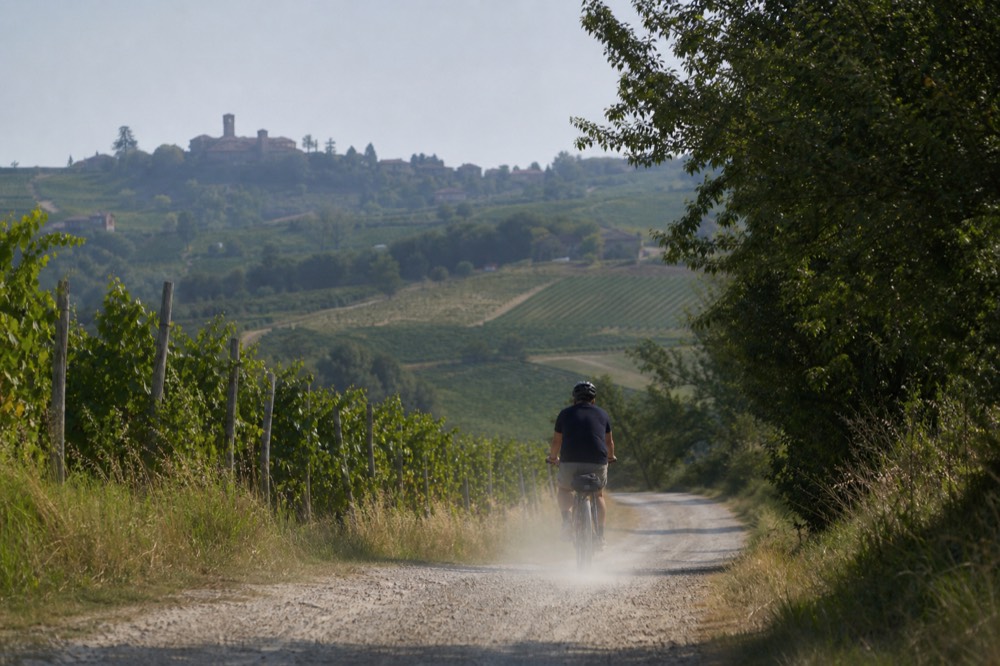
These Monferrato tours share a common advantage: the roads are so lightly trafficked that a rider can hear the birdsong over the sound of their own tyres. The Monferrato Astigiano has none of the Barolo-branded signposts, none of the wine-tourism buses, and none of the restaurant queues that define the Langhe in October. For a cyclist who wants to discover a Piedmont that still feels undiscovered, it is the obvious choice.
The appeal of these places is not that they are unknown, it is that they are unknown to the international tourist circuit. An Italian family from Milan might know Cella Monte, but a visitor from the United States or the United Kingdom almost certainly does not. That is the gap this page is designed to fill, and it is a gap that grows wider every year as the Langhe becomes more crowded and the Monferrato stays exactly as it was.
Here are the most common questions about Piedmont's hidden gems, covering the villages, fortresses, and cycling routes that have opened or been recognised in the last year, and how to reach them on two wheels. These answers point you to the quietest corners of Monferrato and the Alta Langa, away from the Barolo crowds.
Common Questions About Hidden Gems In Piedmont
What are some hidden gems in Piedmont?
The reopened Forte di Gavi, the Bandiera Arancione villages of Cella Monte and Verduno, the Traversella mine museum, and the Ovada wine hills with their CicloDiVino cycling tour are all genuine discoveries that have gained recognition or opened in the last year.
Are the hidden gems in Piedmont reachable by bike?
Yes, the Monferrato and Alta Langa roads are lightly trafficked and well-suited to cycling. Several guided tours, including the CicloDiVino tour in Ovada and the Nizza Monferrato mountain bike tour, are designed specifically to reach these lesser-known spots.
Which Monferrato villages have been recognised as hidden gems recently?
Cella Monte and Verduno received the Touring Club Italiano’s Bandiera Arancione in October 2025, and Borgo del Piazzo in Biella was named a borgo ospite of I Borghi più belli d’Italia in December 2025.
What is the best time to visit Piedmont’s hidden gems?
Spring and autumn give the most comfortable riding temperatures, with September offering the harvest season and the tail end of the summer heat. The Ovada hills and the Alta Langa are particularly quiet in May and October.
Is there a museum dedicated to pallapugno in Piedmont?
Yes, Ca’ Balon in Niella Belbo is the world’s first museum dedicated to the traditional Piedmontese handball game. It is scheduled to open on 9 October 2026.