Is Langhe Worth Visiting?
An honest verdict on the Langhe hills of Piedmont: what rewards visitors, what disappoints those expecting Tuscany, and who should pick a different region.
 By Chiara Barbero, Piedmont Bike Tour Guide and Langhe Cycling Specialist
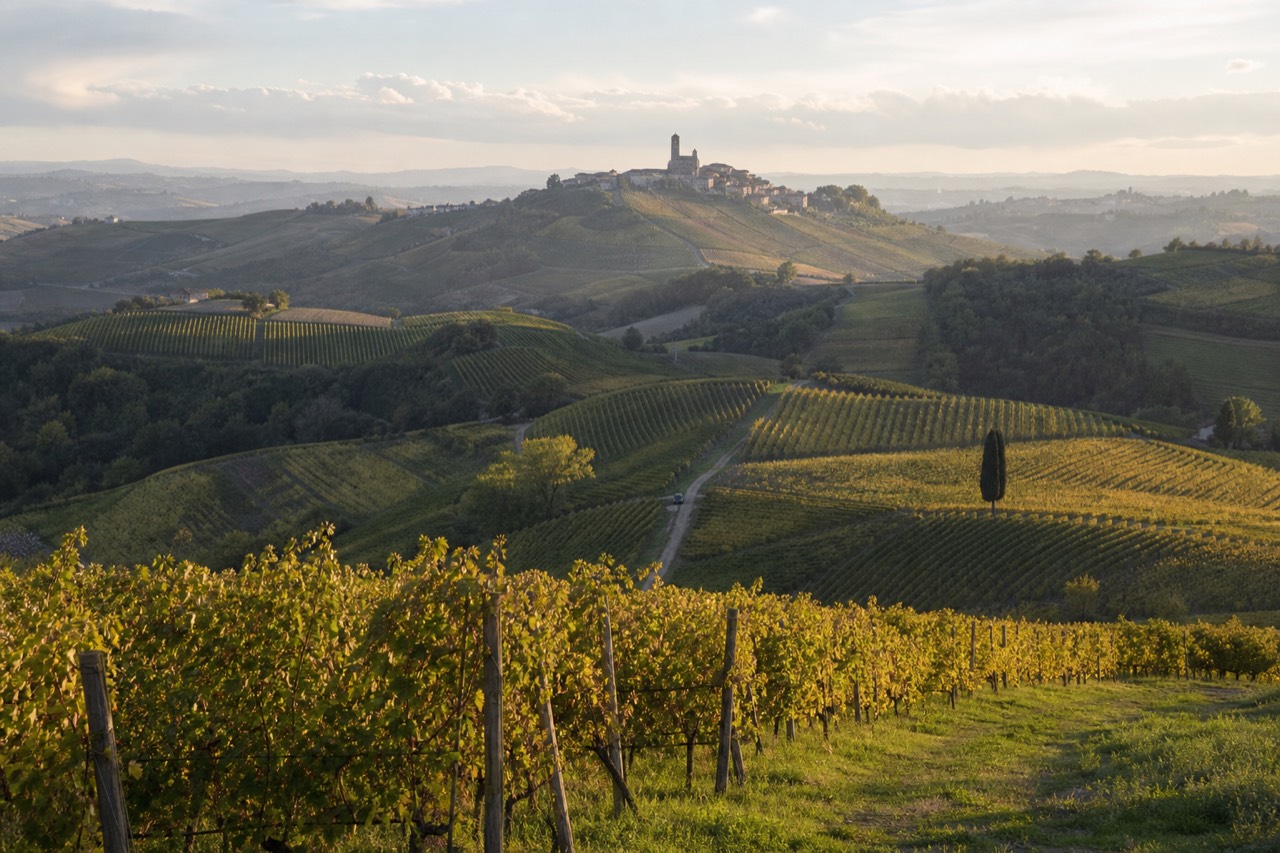
Is Langhe Worth Visiting?
Yes, the Langhe is worth visiting if you want world-class wine, hilltop villages, and serious food in a compact, easy-to-explore area, provided you accept a working rural landscape of vineyards, hazelnut orchards, and truffle country rather than a polished postcard one. In 2025 Langhe Monferrato Roero recorded 761,274 arrivals, up 9.6%, and 61% of overnight stays came from foreign visitors, so plenty of people clearly vote with their bookings. What decides your verdict is whether you come for the countryside and the cellars, or for a generic "beautiful Italy" that this region, with its tractors, fog and steep climbs, only partly supplies. Set expectations honestly and the answer is almost always yes.
The first thing to set straight is what the name covers. The Langhe is the band of hills south of the Tanaro river in southern Piedmont, and the vineyard landscape it belongs to, the Vineyard Landscape of Piedmont: Langhe-Roero and Monferrato, went on the UNESCO World Heritage List in 2014, a serial property of six components covering 10,785 hectares with a buffer zone a further 76,296 hectares. Barolo and Barbaresco, the two Nebbiolo wines that carry the area's fame, both come from these hills: Barolo from an 11-commune zone in the province of Cuneo, Barbaresco from Barbaresco, Treiso, Neive and part of Alba.
The honest comparison to make, and the one most first-time visitors are silently making, is against Tuscany. The landscapes rhyme, but they are not twins. The Langhe is smaller, steeper in its back hills, and more obviously a working agricultural zone: tractors during the September harvest, cellar traffic, small villages with a few hundred residents. Alba, the de facto capital, has 30,985 residents. Barolo, the village that names Italy's most famous red wine, has 613. That scale is the charm for some travelers and the disappointment for others.
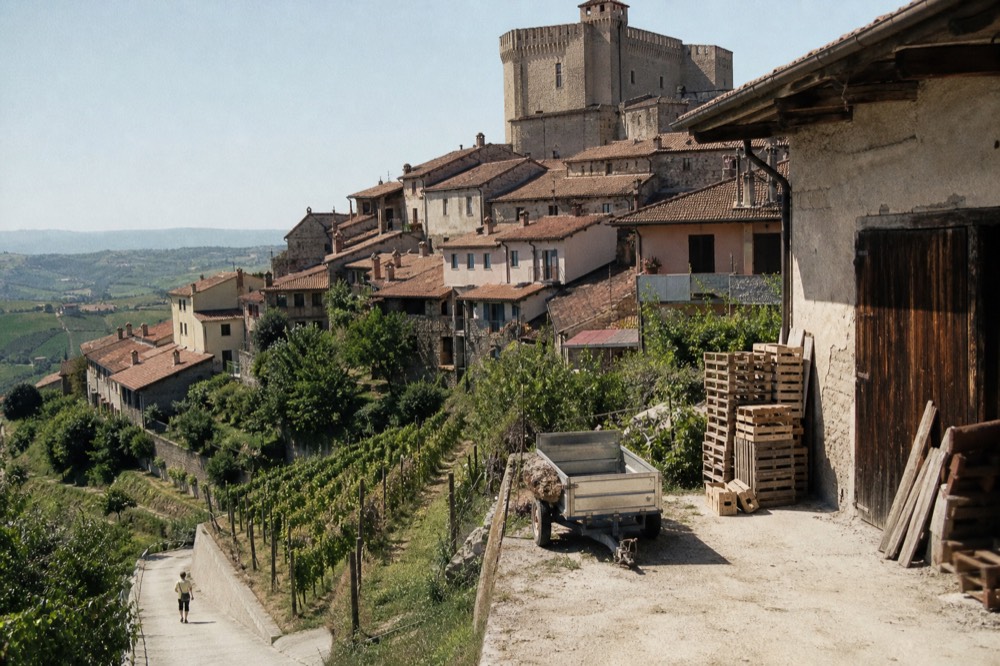
If the answer for you is leaning yes, the most efficient way to see the hills is on a bike, because the distances are short and the roads between the famous villages are the attraction. Every well-known Barolo and Barbaresco village sits within roughly 20 km of Alba: La Morra at about 15.8 km, Barolo at about 13.9, Barbaresco at about 13.5, Monforte d'Alba at about 19.6. Three tours below cover the most common ways people ride this terrain, from a private full-day loop to a guided tasting ride to a cellar-focused trip out of Alba.
What Actually Rewards Visitors In The Langhe?
What actually rewards visitors in the Langhe is a concentration of pleasures rare for such a small region: world-class wine tasted at its source, a food culture that punches far above the area's size, and hilltop villages you can string together in a single day by bike or car. Barolo DOCG is 100% Nebbiolo, aged a minimum of 38 months from 1 November of the harvest year, 18 of them in wood, and produced across 11 communes, only three of which (Barolo, Castiglione Falletto and Serralunga d'Alba) lie entirely inside the zone. Barbaresco is the same grape with 24 months of ageing, 9 in wood, from a much smaller zone. Together they give the hills a cellar culture few regions can match.
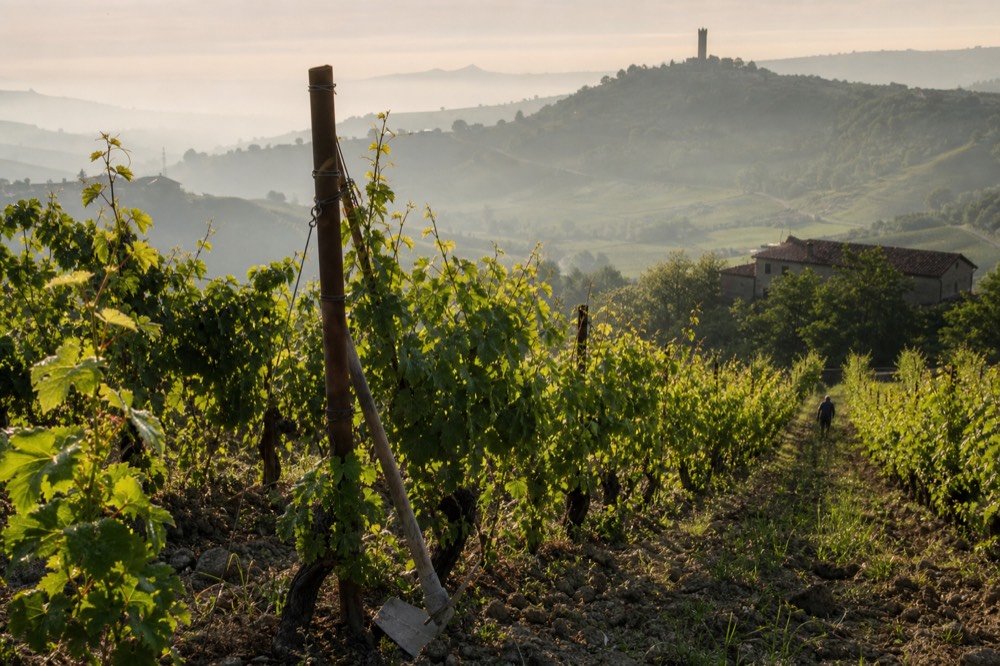
The food side holds up on its own. The region's reference points are tajarin, the thin hand-cut egg pasta, agnolotti del plin, carne cruda all'albese, and from late autumn the white truffle, whose legal hunting season in Piedmont runs 1 October to 31 January. The Alba white truffle fair, the 96th Fiera Internazionale del Tartufo Bianco d'Alba, runs 10 October to 6 December 2026. If your trip can land in October or November, the truffle season alone can settle the verdict in favour, with the caveat that October is also peak demand for accommodation in Alba.
Piedmont's food standing also has hard numbers behind it: the region reached 34 Bib Gourmand entries in the 2026 Michelin Guide, tying Emilia-Romagna for the highest regional total, with new entries including Le Due Lanterne in Nizza Monferrato and Osteria Bar Sport in Casale Monferrato, both in the wider Langhe-Monferrato area. Langhe wine tastings with a cellar visit in the Alba area are listed from roughly €25-50 per person, so a day of tasting does not require a luxury budget. That spread comes from operator listings, so treat it as a from-price range and check the cellar you want.
The village-hopping is the third reward and it is genuinely compact. La Morra, the highest of the well-known villages with its centre at 508 m, sits 6 km from Barolo; Barolo to Monforte d'Alba is under 7 km. A rider linking the Barolo villages from Alba covers about 68 km with roughly 877 m of climbing, which is a serious but very achievable day on an e-bike. Our guide to Barolo bike tour routes breaks the village links down village by village.
The table below shows how tight the famous-village cluster really is, using road distances from Alba and resident populations. This compactness is the single most practical fact for planning a Langhe trip: you never drive or ride far, but you do climb.
| Village | Road distance from Alba | Residents | Village centre elevation |
|---|---|---|---|
| Barolo | about 13.9 km | 613 | 303 m |
| Barbaresco | about 13.5 km | 600 | 262 m |
| Neive | about 13.4 km | 3,192 | 294 m |
| La Morra | about 15.8 km | 2,626 | 508 m |
| Serralunga d'Alba | about 15.5 km | 484 | 390 m |
| Monforte d'Alba | about 19.6 km | 1,864 | 472 m |
| Castiglione Falletto | inside the Barolo loop | 655 | 349 m |
If that table makes you want to get moving, the private e-bike format is the one that fits it best: it turns a day of short hops and repeated climbs into one continuous ride with tastings built in.
What Disappoints People Who Arrive Expecting Tuscany?
Most visitors let down by the region share the same three complaints: the villages turn out to be smaller and quieter than the postcards suggested, the area is simply not organised around sightseeing the way Tuscany's famous towns are, and the hills between them demand real physical effort, or at least an e-bike, to get around. This is not a criticism of the Langhe, it is a mismatch of expectations, and it is the single biggest reason a visit lands badly. Travelers who arrive knowing what the region is, a working wine landscape with hamlet-sized villages, rate it far higher than those who arrive expecting a museum-piece Tuscany with better food.
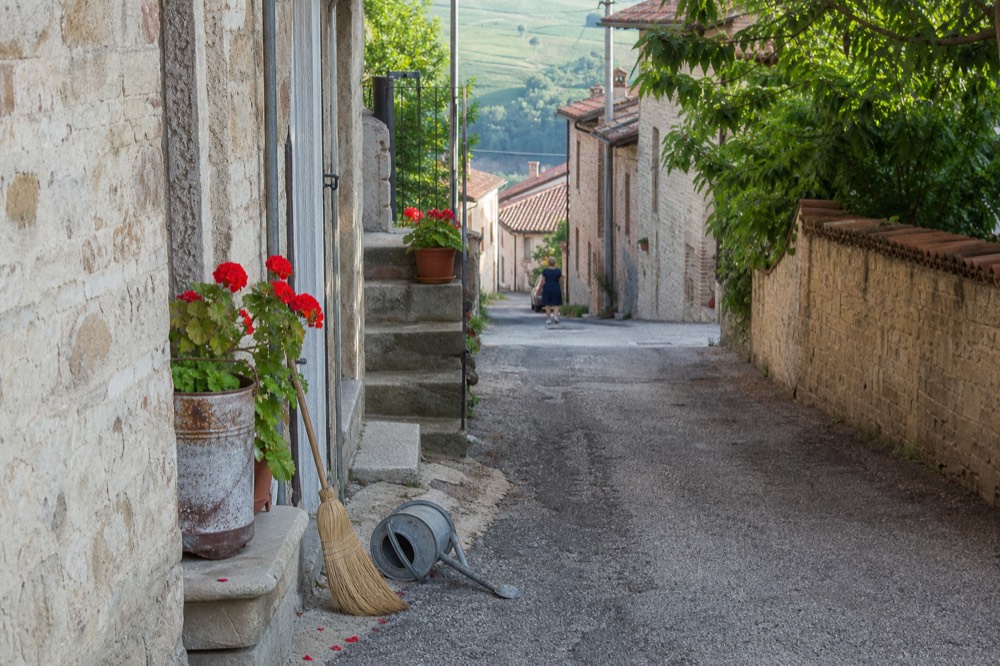
The scale issue is worth spelling out because the numbers surprise people. Serralunga d'Alba has 484 residents. Castiglione Falletto has 655. These are hamlets with a church, a cellar or two, a viewpoint and not much open on a Tuesday in February. If your mental image is a San Gimignano-style hill town with an hour of shops and monuments, you will run out of things to do in a village in about twenty minutes. The Langhe's villages are stops, not destinations; the region's destination is the whole.
The second mismatch is that this is a working landscape. Harvest machinery on the roads in September, the smell of fermentation in the villages, cellars that close for a proper lunch break, and an August period when family-run businesses around Ferragosto shut. The 2026 season even brought extreme weather: the Nebbiolo harvest began in early September amid record heat, after a 7 August supercell dropped 80 mm of rain and hail on Langhe vineyards just before picking. None of that ruins a trip, but it means the region runs on its own calendar, not a visitor's.
The third is physical. The famous villages look close on the map, but this is rolling-to-steep terrain: the Barolo loop from Alba carries roughly 877 m of climbing, and the road up to La Morra alone gains about 329 m over 15.8 km. On a hot August day, with average highs around 28.8 °C, that is a slog for an untrained rider on a flat-bar bike. The fix is simple, either pedal assist or, for flat days, the Tanaro valley route from Alba toward Asti, which is about 31 km with almost no climbing. Our page on e-bike tours in Italy explains why this landscape in particular suits pedal assist.
For the honest counterweight: growth has a cost for residents. Gazzetta d'Alba reported that short-term rental accommodations in Langhe Monferrato Roero increased 500% over six years through 2025, reducing long-term housing availability. That is the real texture behind the record arrivals, and a reason to book a base early, especially in the October peak.
Is The Langhe Worth It Without Drinking Wine?
It is worth about two-thirds of a visit: the landscape, the food, the truffle season and the quiet villages carry a trip, but without wine the region loses the thread that ties it together, and you should plan accordingly. The vines themselves are the scenery: Langhe DOC, the broad appellation that covers much of the area, more than doubled its vineyard area between 2015 and 2025, and the terraced Nebbiolo slopes are what earned the UNESCO inscription under criteria (iii) and (v) in the first place. Come for the views and the table, just do not expect the cellars to be optional extras.
Non-wine anchors do exist and they are good ones. Alba itself is a genuine small city worth half a day, and its museums and truffle season make it a base rather than just a transit point. La Morra's Museo Renato Ratti del Barolo e dei Vini d'Alba reopened with a new layout in October 2025 and is free on weekends. Roero, on the other side of the Tanaro, is a different landscape of sandier ground cut by the Rocche erosion cliffs, and can be reached in a short hop from Alba; our Monferrato and Roero cycling guide covers the quieter half of the region for riders who want fewer tasting rooms.
Food-led visitors do very well here. Truffle hunting experiences in the Langhe are listed from about €50 per person, usually with a local trifolau and dog, and the autumn festival calendar, Vinum in spring and the truffle fair from October, gives structure to a stay. A practical itinerary for a non-drinking visitor would be one day of landscape and village hopping, one day of food (a hands-on pasta meal, a market, a truffle hunt in season), and one day in Alba or across the Tanaro in Roero. That fills three days comfortably, and three days is roughly the right trip length for most first visits.
When Is The Langhe At Its Best?
The Langhe shines from May through June and again in September and October. September brings the grape harvest with an average high of 23.6 °C, while October layers in truffle season and turning vine colours. Late spring offers lush green hills without summer heat, making these months the strongest time to visit. July and August are the hardest riding months, with average highs of 29.2 °C and 28.8 °C, and November is the wettest month of the year at around 115 mm of rain, though it is also deep truffle season with lower crowds. Pick the window that matches what you came for.
| Month | Typical average high | What it gives you | What to watch |
|---|---|---|---|
| May | 21.5 °C | Green hills, Vinum wine festival in Alba | Peak hotel occupancy in Turin-area trips |
| June | 26.1 °C | Long days, early vine growth | Heat waves possible, as in 2026 |
| July | 29.2 °C | Driest month, clear skies | Hard climbing in heat; book e-bike |
| August | 28.8 °C | Warmest nights of the year | Ferragosto closures in family cellars |
| September | 23.6 °C | Harvest underway, best riding | Cellars busy with vendemmia |
| October | 17.6 °C | Truffle fair, vine colour | Peak crowds and accommodation demand |
| November | 11.7 °C | Deep truffle season, quiet roads | Wettest month, about 115 mm of rain |
The pattern the visitor numbers now show is worth knowing: a La Stampa report on 2026 found that summer presences in Langhe and Roero exceeded the traditional autumn season, with May through August accounting for 50% of annual presences. The classic October peak still dominates Alba's short-let occupancy and hotel demand, tied to the truffle fair, but the region is no longer empty outside autumn. Book ahead in either window.
If you are riding rather than driving, September is the standout: the harvest is underway (Nebbiolo picking ran from early September in 2026), the heat has broken, and the roads have a reason to feel alive. Autumn vine colour follows the harvest across October and November, with Nebbiolo leaves turning yellow and Dolcetto red, though there is no verified "peak week" to aim for. Our best time to visit Piedmont guide runs the full month-by-month comparison.
Should You Book A Guided Tour Or Go Independent In The Langhe?
Go independent if you are comfortable on the hills, want to choose your own cellars, and are happy booking tastings directly; take a guided tour if your days are short, you want the logistics handled, or you want the riding legs of the day to be someone else's problem. Both work here. The roads between the villages are ordinary rural roads, and bike rental exists in Alba and around the Barolo zone. The choice is about time and confidence, not capability.
The case for a tour is stronger in the Langhe than in flatter regions precisely because of the terrain and the logistics. Tastings need booking, often weeks ahead in October; a tour bundles them. The climbs are real, and an e-bike tour removes them as a constraint on who in your group can ride. And the region's roads are outside built-up areas for almost their entire length, which matters for planning: Italian law requires a reflective vest when riding outside built-up areas from half an hour after sunset to half an hour before sunrise, and in tunnels at any hour.
The three main paid formats compare like this:
| Format | Length | Price | Reviews |
|---|---|---|---|
| Private e-bike tour, Langhe del Barolo (asphalt and dirt) | 6 to 7 hours | from $118 per person | rated 5 across 29 reviews |
| Guided scenic e-bike tour with wine tasting, Barolo | about 5 hours | from $186 per person | 5 reviews, too few for a star claim |
| E-bike tour with cellar tasting, Alba | about 6 hours | from $186 per person | 6 reviews, too few for a star claim |
For a first visit, the private format is the one this site rates most consistently for the Langhe, because it lets you set your own pace through the Barolo villages and mix asphalt and dirt farm roads.
A middle path that suits confident riders is self-guided touring: rental, a route plan and your own cellar bookings. Our self-guided bike tours in Italy guide covers what that takes. Whichever you choose, the sequencing advice is the same: pick a base inside the hills (Alba, or a village like La Morra or Monforte d'Alba) rather than commuting in from Turin, and keep your riding days in the morning, when the light is better and the heat and the cellar traffic are lower.
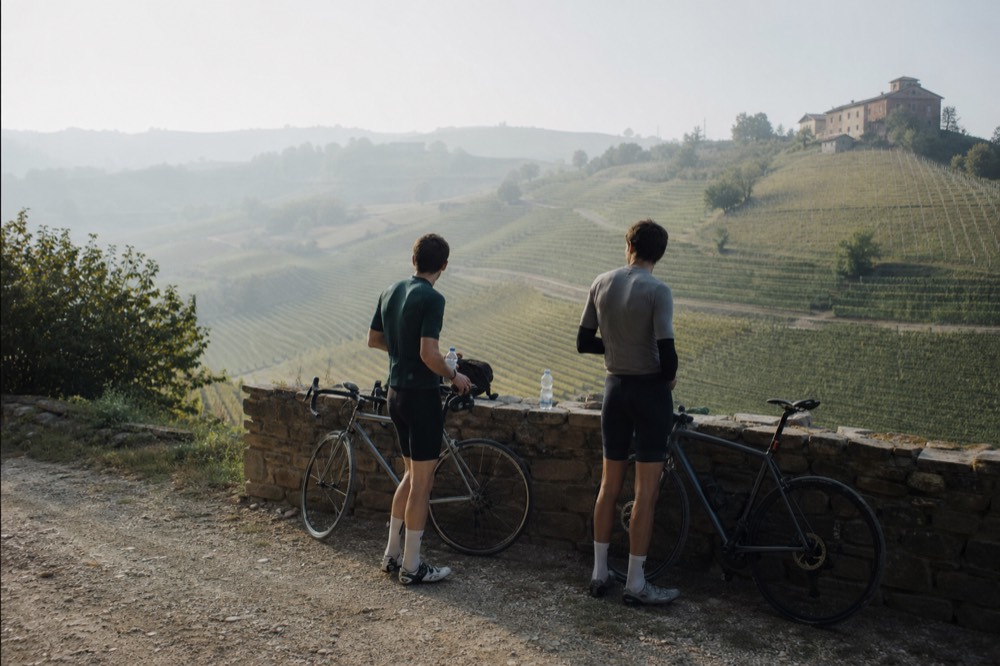
The verdict, restated plainly: the Langhe is worth visiting for travelers whose idea of a good day is a hard or assisted ride through vineyards, a long lunch, and two or three serious tastings. It is not worth it as a check-in on a generic Italian-hills itinerary, and it will underdeliver for anyone who needs museums, nightlife or big-town energy. This is a region that rewards a bit of planning, and Piedmont Bike Tours exists because the planning part, the routes, the seasons and the cellar logistics, is where most of the value sits.
Common Questions About Langhe Visits
Is Langhe worth visiting?
Yes, if you want wine, hill villages and serious food in a compact working landscape. It recorded 761,274 arrivals in 2025 and 61% of overnight stays came from foreign visitors. It is not worth it as a generic sightseeing stop: the villages are small and the region's appeal is the whole, not any single attraction.
How many days do you need in the Langhe?
Three days is the right length for most first visits: one for the Barolo villages, one for Barbaresco and Neive or a ride across the Tanaro into Roero, and one for Alba and a food or truffle experience. Two days works if you ride e-bikes and compress the village circuit.
Is the Langhe the same as Barolo?
No. The Langhe is the hill region; Barolo is a wine and a village inside it. The Barolo DOCG zone covers 11 communes in the province of Cuneo, and the village of Barolo itself has 613 residents.
Is October a good time to visit the Langhe?
October is the peak: truffle season starts (legal hunting from 1 October), the Alba truffle fair runs 10 October to 6 December in 2026, the harvest has just finished and the vines colour through October and November. It is also the busiest month for accommodation in Alba, so book early.
Can you visit the Langhe without a car?
Partly. Direct trains reach Alba from Turin in around 90 minutes, and Alba works as a base. But the villages themselves are spread across hills with thin bus service, so a car, a bike or a guided transfer-based tour is needed for the village circuits.