Is Barolo, Italy Worth Visiting?
The honest verdict on Barolo the village: tiny, expensive, and only half the point. What to expect, what to skip, and how to ride the surrounding hills.
 By Chiara Barbero, Piedmont Bike Tour Guide and Langhe Cycling Specialist
Is Barolo, Italy Worth Visiting?
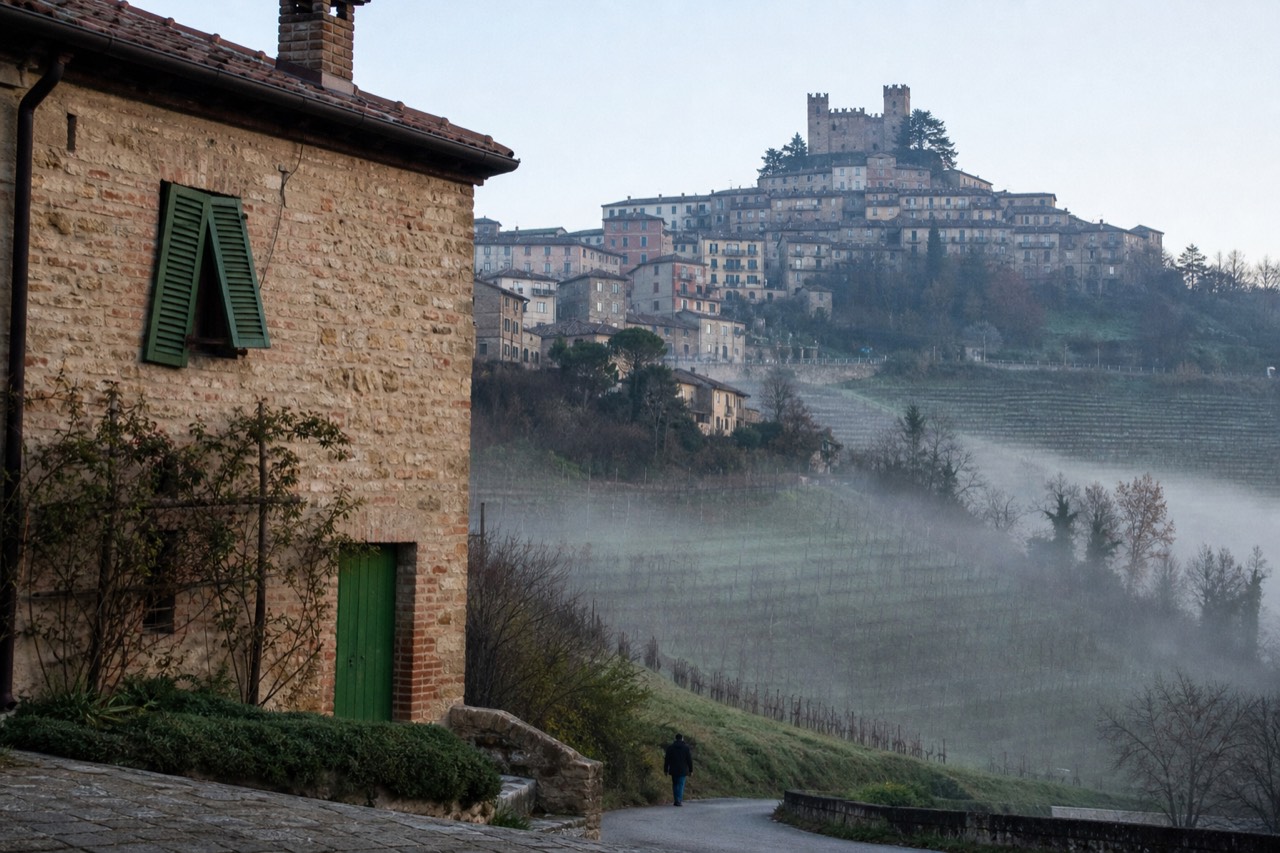
Yes, but only if you know what you are visiting. Barolo is a village of 613 residents, not a town, and a good part of its fame lives in the wine and the hills rather than in the streets. Spend two hours walking it and you have seen it. Give it a day with a bike, a cellar and lunch, and it becomes the best base in the Langhe.
The number matters more than it sounds. ISTAT counts 613 people living in Barolo, against 30,985 in Alba twenty minutes away. Visitors arriving with a picture of a bustling wine capital are the ones who leave disappointed, and almost every negative verdict on the village traces back to that mismatched expectation rather than to anything Barolo does wrong. Say it plainly: this is a hamlet with a world-famous name.
What the name buys you is real. Barolo sits inside the production zone of one of Italy's most regulated wines, 100% Nebbiolo, aged a minimum of 38 months with at least 18 in wood, the clock starting on 1 November of the harvest year. The landscape around it has been on the UNESCO World Heritage List since 2014, as part of the Vineyard Landscape of Piedmont: Langhe-Roero and Monferrato. So the raw material for a great day is all here. It is just spread across the hills instead of concentrated in the village.
The practical question behind every "worth it" search is how to structure the visit. A car day that drives to Barolo, parks, photographs the castle and leaves is the weakest version. A day that starts in the village and then moves through La Morra, Serralunga d'Alba and Castiglione Falletto on two wheels is the strong one. A rider leaving Alba reaches Barolo in about 13.9 km, and every other famous Barolo-zone village sits within roughly 20 km of that same starting point.
How Small Is Barolo The Village, Really?
Small enough to walk end to end in under half an hour. The comune covers 5.71 square km, its centre stands at 303 m above sea level, and its highest ground reaches only 480 m. For comparison, La Morra, 6 km away by road, sits at 508 m. Barolo is a single street, a castle, a church and a handful of tasting rooms. That is the whole village.
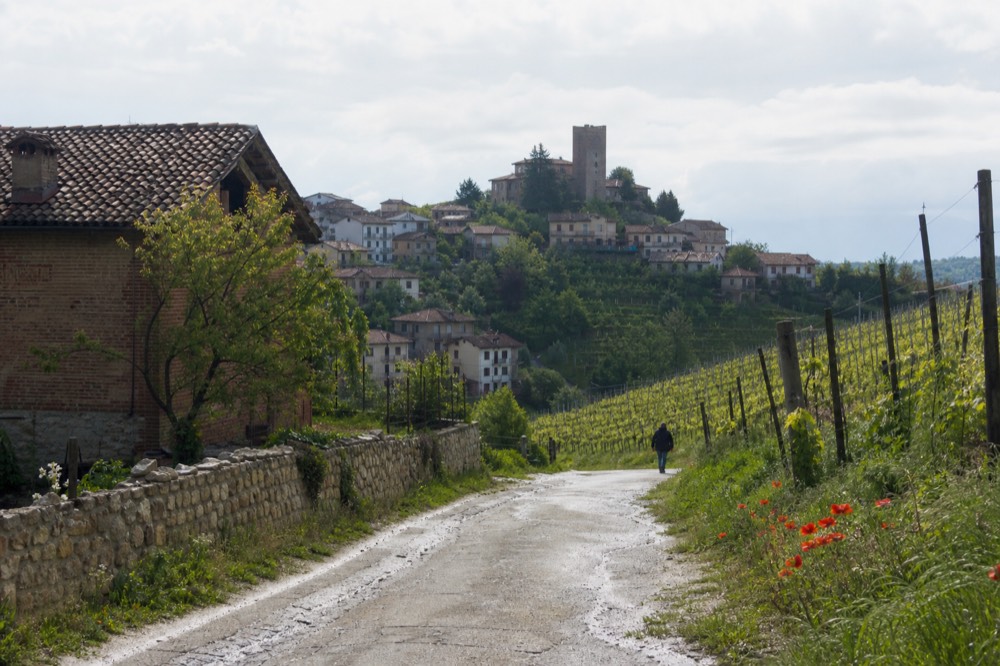
The geography explains the layout. The village occupies a ridge shoulder below La Morra, with the castle and the main street running along the crest. There is no old quarter to get lost in, no network of lanes, no lookout tower to climb for a fee. What there is, is a castle with a wine museum inside it, and a stretch of road with cellars, an enoteca and a couple of restaurants. Everything a visitor needs is within a five-minute walk of the parking.
The contrast with its neighbours is the honest framing. Barolo has 613 residents, La Morra 2,626, Monforte d'Alba 1,864, Serralunga d'Alba 484. All of them are small. None of them is a town. The only genuine town in the Barolo zone is Alba, 30,985 people, which is why most riders base there and treat the villages as destinations on loops rather than as places to stay. A village-to-village day works, a village-only day runs out of village.
Worth knowing too: the wine zone named after this place is far larger than the village itself. The official production rules list 11 comuni in the Barolo DOCG zone, of which only three, Barolo, Castiglione Falletto and Serralunga d'Alba, lie entirely inside it. The other eight, including La Morra, Monforte d'Alba and Novello, contribute only part of their territory. So "visiting Barolo" as a wine region means visiting a spread of hilltop hamlets, not one of them.
What Is There To Actually Do In Barolo?
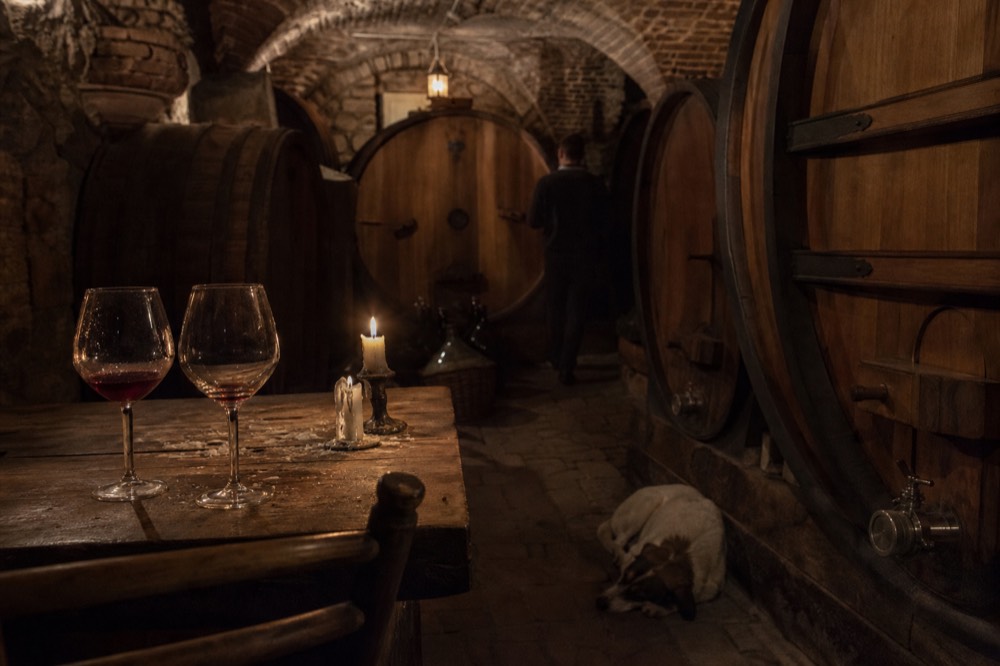
Three things, done well: a wine museum in the castle, cellar tastings, and lunch. The WiMu Museo del Vino inside Castello di Barolo is the anchor, and the Museo Renato Ratti in La Morra, 6 km away, reopened with a new layout on 25 October 2025. Beyond those, the village's activity is drinking Barolo where it is made. Anything more needs wheels.
The castle is the one unmissable structure. It holds WiMu, the regional wine museum, which announced a restyling project in November 2025 to update its content and technology. A museum visit plus a tasting plus a long lunch is a full and genuinely good day in the village, and the fact that it fills a day tells you the scale. Anyone planning a second activity needs to leave Barolo to find it.
That is where the hills take over. The surrounding vineyards are part of the UNESCO inscribed property, and the roads between the villages are quiet, narrow and continuous. A private guided e-bike day over asphalt and dirt through the Langhe del Barolo runs six to seven hours and costs from $118 per person, which for a small group is often less than the combined cost of a driver, a tasting and a restaurant on a car day.
If a guided day is more structure than you want, the same hills work on a rental. An e-bike rental with food and wine experiences in the Langa del Barolo runs about a full day from $52 per person, letting you pick your own cellars and pace. Between the private tour and the rental sits most of the realistic range of ways to see the zone, and both answer the "village is too small" problem the same way: by turning Barolo into one stop among five.
Should you book a tour or go independent?
Independent visiting works fine for confident riders who have researched cellars, since distances are short and the roads are manageable. It works less well for anyone who wants tastings arranged, since the better cellars in the zone run on appointments, and an e-bike with a guide solves both the hills and the bookings at once. The 877 m of climbing on a full Barolo villages loop from Alba is real, and pedal assist flattens exactly the parts of the day that would otherwise eat the afternoon.
Is Barolo Better Than La Morra Or Barbaresco?
As a village to linger in, La Morra arguably has the better view and the bigger eating scene, and its museum is free on weekends. Barbaresco has its own wine and fewer crowds. Barolo has the name, the castle and the wine museum. None of them beats the others by much, and riding between them, which takes minutes, makes the comparison mostly academic.
The honest differences are practical. Barolo draws the tour buses, so mid-morning and mid-afternoon its single street is the busiest of the three. La Morra, 6 km away by road, sits higher at 508 m and spreads its restaurants and tasting rooms along a ridge, which absorbs people better. Barbaresco, about 14 km from Alba on the other side of the valley, is quieter still, with 600 residents and the tower everyone photographs from the road.
| Village | Residents | Centre elevation | Distance from Alba | Strongest card |
|---|---|---|---|---|
| Barolo | 613 | 303 m | about 14 km | Castle, WiMu museum, the name |
| La Morra | 2,626 | 508 m | about 16 km | Panoramic terrace, Ratti museum, restaurants |
| Barbaresco | 600 | 262 m | about 13.5 km | Quieter streets, Nebbiolo with 24 months ageing |
| Serralunga d'Alba | 484 | 390 m | about 15.5 km | The zone's most imposing castle |
The wine comparison follows the same pattern of small, real differences. Barolo must age 38 months counted from 1 November of the harvest year; Barbaresco, the same Nebbiolo grape grown a valley away, needs 24 months with 9 in wood. Same grape, same hills, roughly a year and a half apart in the cellar, which is why the two wines sit side by side on every tasting list and why riders who like one usually end up liking both. The full picture is in our Barolo vs Barbaresco comparison.
For the riding itself, all three work. A loop from Alba through Barbaresco, Neive and Treiso covers about 36 km with roughly 457 m of climbing, gentler than the Barolo-side circuit. The classic Barolo villages loop covers 67.9 km with 877 m of ascent, crossing Grinzane Cavour, La Morra, Barolo, Novello, Monforte d'Alba, Serralunga d'Alba and Castiglione Falletto before returning to Alba. Riders who want the structure of either, on an e-bike, will find the route notes in our Barolo bike tour routes guide.
When Is The Best Time To Visit Barolo?
September and October, with May close behind. September averages a 23.6 °C high at Alba and coincides with the Nebbiolo harvest, which runs from late September with Barolo fruit usually the last off the hill in early October. October brings vine colour and the opening of the truffle season on 1 October. July and August trade heat for crowds; November is the wettest month of the year.
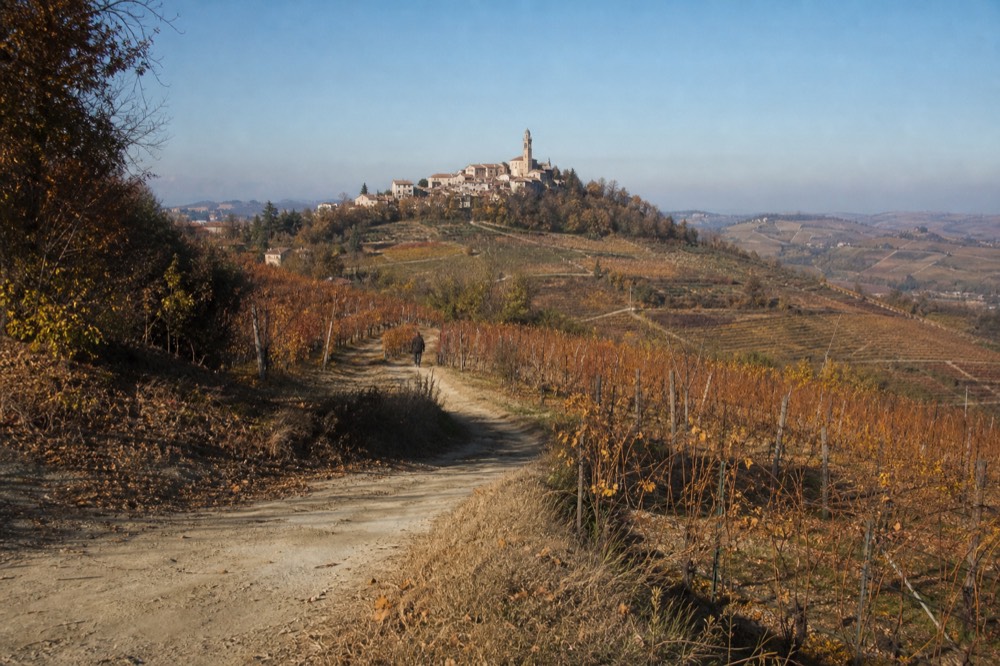
The autumn windows are where the village earns its keep. Harvest traffic fills the roads with tractors, the vines shift colour after the grapes come off across October and November, Nebbiolo leaves turning yellow and Dolcetto red, and the white truffle season opens legally on 1 October and ends on 31 January. The Alba truffle fair, the 96th edition, runs 10 October to 6 December 2026, and its Saturday and Sunday market days pull the region's biggest crowds of the year, with online tickets at €6 plus fees including entry to the MUDET museum.
Spring is the connoisseur's pick. May averages a 21.5 °C high with real but manageable rain, the vines are in fresh leaf, and visitor numbers sit well below the October peak. July and August bring average highs of 29.2 °C and 28.8 °C, plus the August closure period around Ferragosto when family-run cellars and restaurants shut for holidays. Anyone whose trip is fixed to school holidays should target late May or early June rather than August.
What Does A Day In Barolo Cost?
More than the village's size suggests. Tastings in the Alba area are listed from around 25 to 50 euro per person, the truffle fair's market entry is 6 euro online, and a full guided e-bike day starts at $118. Set against a city break it is not cheap, but the per-hour cost of a riding day is the best value in the region, because the scenery between the stops is free.
The tasting line needs its caveat stated plainly: those 25 to 50 euro figures are a spread of from-prices on operator listings, not a survey, so treat them as a planning range and check each cellar directly. Premium Barolo carries the region's steepest price tags, and the economics behind a 38-month-aged wine from a zone of 2,288 hectares are covered in our piece on why Barolo is so expensive.
| Item | Typical planning range | Notes |
|---|---|---|
| Cellar tasting, Alba area | listed from €25-50 per person | Range of from-prices on operator listings, not a survey |
| Truffle fair market entry | €6 online plus fees | Includes MUDET museum entry, Saturdays and Sundays only |
| WiMu wine museum, Castello di Barolo | price on the listing | Restyling announced November 2025, check before visiting |
| Museo Renato Ratti, La Morra | free on weekends | Reopened 25 October 2025 |
| Guided e-bike day, private | from $118 per person | 6 to 7 hours, asphalt and dirt roads |
| E-bike rental with wine stops | from $52 per person | About a full day, self-directed |
One cost almost nobody budgets is time-of-day. Barolo's single street absorbs tour groups from late morning, so the cellar appointments worth most are the first opening of the morning and the late-afternoon slot, with the middle of the day spent on a bike rather than in the village. Riders who finish a loop toward dusk should also remember the Italian rule that catches visitors out: outside built-up areas, from half an hour after sunset, a reflective vest is legally required, and a bell is required equipment at all hours.
Is Barolo Worth Visiting Without A Bike?
Yes, but the verdict weakens. Without wheels the day reduces to the castle, one cellar and lunch, all within a five-minute walk, and the comparison with La Morra's terrace or Alba's evening life starts to favour elsewhere. With a bike, or even a car loop through three villages, Barolo stops being small and becomes the natural centre of the day. The bike is the difference.
Non-riders have two honest options. The first is the truffle-season Saturday: arrive by the historic train or the ordinary rail connection to Alba, transfer to Barolo, and let the fair-day energy replace the missing village size. The second is the museum pairing, WiMu in the castle in Barolo plus the Ratti museum in La Morra, joined by the short drive or taxi hop between them, with a single serious cellar appointment in one of the two. Both are good days. Neither justifies more than one day.
The rail detail helps: the 3.50 euro bike supplement on regional trains is valid until 23:59 on the ticket date, e-bikes included, which makes an arrive-by-train, ride-the-hills, return-by-train day entirely possible from Turin. Turin to Alba runs direct with no change, a little over an hour and a half. That pattern, train plus bike, is the one that makes Barolo worth visiting for travellers without a car.
It is also the pattern this whole site exists for, and Piedmont Bike Tours was built around exactly this question. The villages are small, the hills between them are the attraction, and pedal assist is what lets a visitor of any fitness level collect five of them in an afternoon. For the fuller argument on why this region rewards two wheels, see our guide to cycling in Piedmont.
So, Is Barolo Worth Visiting?
Worth visiting, yes; worth travelling for on its own, no. The village is a 613-person hamlet with a castle and a museum, and it will disappoint anyone expecting a town. The Barolo zone, eleven villages spread over roughly 20 km of hills, is one of the great wine landscapes in Europe, and that zone justifies the trip. Judge the village as a single stop and the verdict flips from mixed to clear.
The pattern to avoid is the single-stop visit. Arrive, park, photograph, taste once, leave, and Barolo underperforms La Morra let alone Alba. The pattern to choose is the moving day: bike or drive a loop that strings Grinzane Cavour, La Morra, Barolo, Serralunga d'Alba and Castiglione Falletto together, with one appointment and one long lunch somewhere in the middle. On that day the village is not too small, it is exactly the right size, because there are four more like it over the next ridge.
For the practical layer, timing matters as much as route. September and October give the harvest, the colour and the truffle fair; May gives the vines in leaf with thinner crowds; August gives heat and closures. Book the cellar, book the bike, check the weather, and the answer to the question stops depending on luck.
Barolo is worth visiting as the anchor of a day across the hills, not as a town. The village holds 613 residents and walks in half an hour, while the wine zone around it spreads across 11 comuni. Every question here resolves the same way: base yourself in Alba or La Morra, and let a bike connect the villages.
Common Questions About Barolo
is barolo, italy worth visiting?
Yes, if you treat it as one stop in a day across the hills rather than as a destination town. The village has 613 residents and can be walked in half an hour. The surrounding Barolo zone, 11 villages and a UNESCO-listed landscape within about 20 km of Alba, is what justifies the trip.
How many days do you need in Barolo?
One day for the village plus a loop through neighbouring villages. Two days if you want slow cellar visits and the truffle fair in October. Longer stays are better based in Alba, which is a real town of 30,985 people, with Barolo visited on rides from there.
Can you visit Barolo without a car?
Yes. Trains reach Alba directly from Turin in a little over an hour and a half, regional trains carry bikes for a 3.50 euro supplement valid until 23:59 on the ticket date, and e-bike rental plus guided tours operate from the Alba area. A taxi, or a transfer arranged with your rental or tour operator, covers the last stretch to the village.
What is there to do in Barolo in the evening?
Not much, and that is part of the honest answer. The village's restaurants close early by city standards and there is no evening scene. Most visitors stay in Alba or La Morra for the evening and treat Barolo as a daytime stop, or book a dinner table as part of a cellar day and let the meal be the evening.
Is Barolo the same as the Barolo wine zone?
No. Barolo is one village of 613 residents. The Barolo DOCG production zone covers 11 comuni in the province of Cuneo, only three of which, Barolo, Castiglione Falletto and Serralunga d'Alba, lie entirely inside it. La Morra, Monforte d'Alba and Novello, which most visitors also tour, contribute only part of their territory.